
Wilhelmshaven
as Colonial
Thought-Space
as Colonial
Thought-Space
Exhibition Nordwestkunst
Kunsthalle Wilhelmshaven 2025 March
The ‘colonial space of thought’ in public space is understood as a mental or virtual realm, defined by monuments, sculptures, street names, and architectural artworks. This space is shaped by images encountered in the public sphere—seemingly unstructured, yet governed by the surviving elements of a postcolonial order.
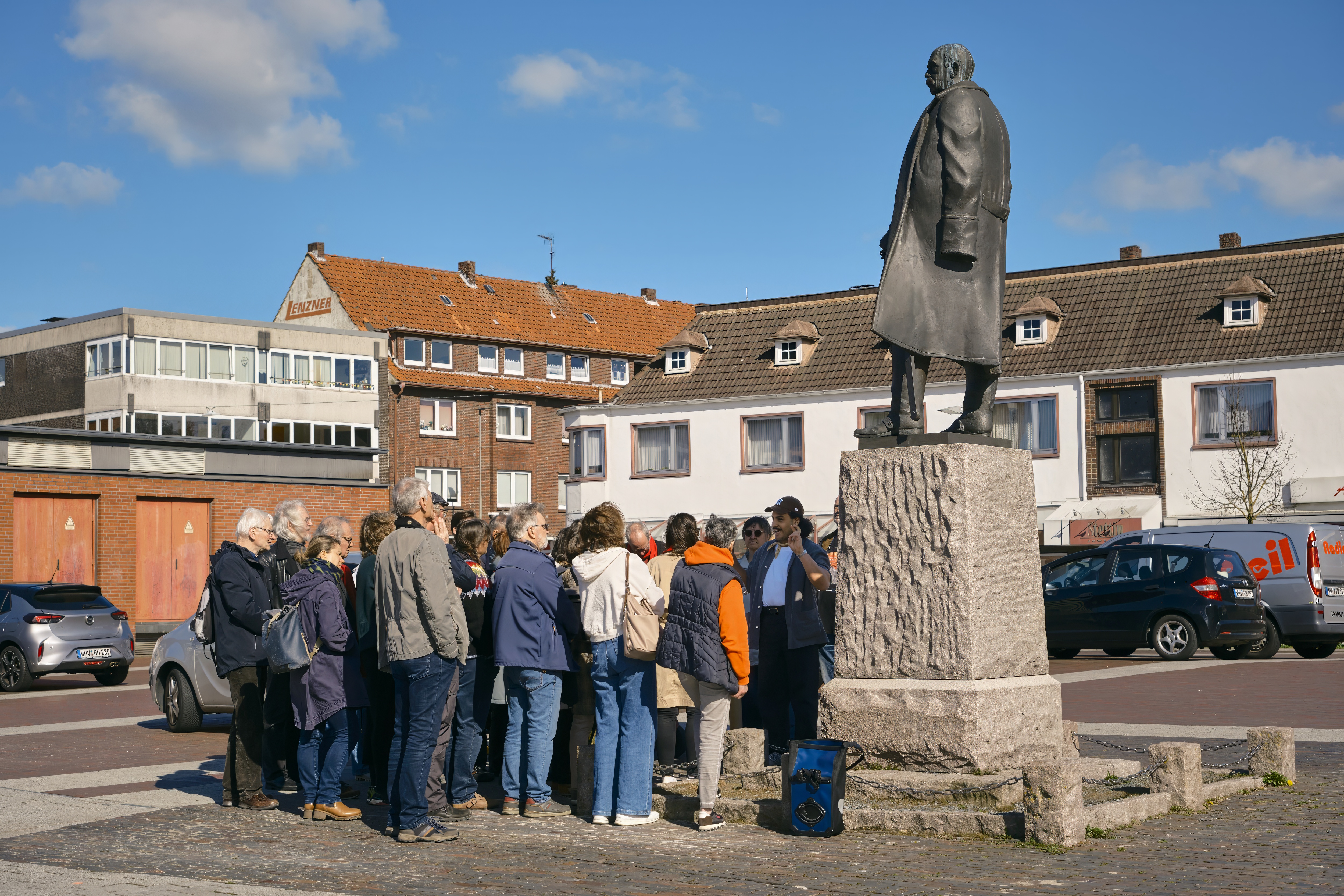
The intervention began at the Otto von Bismarck Monument (A1), inaugurated in 2015, which represents a gesture of colonial nostalgia. At this site, the commemorative plaque was covered with a text printed on silk paper that challenged the official narrative about Bismarck’s legacy, especially his role in colonial history.
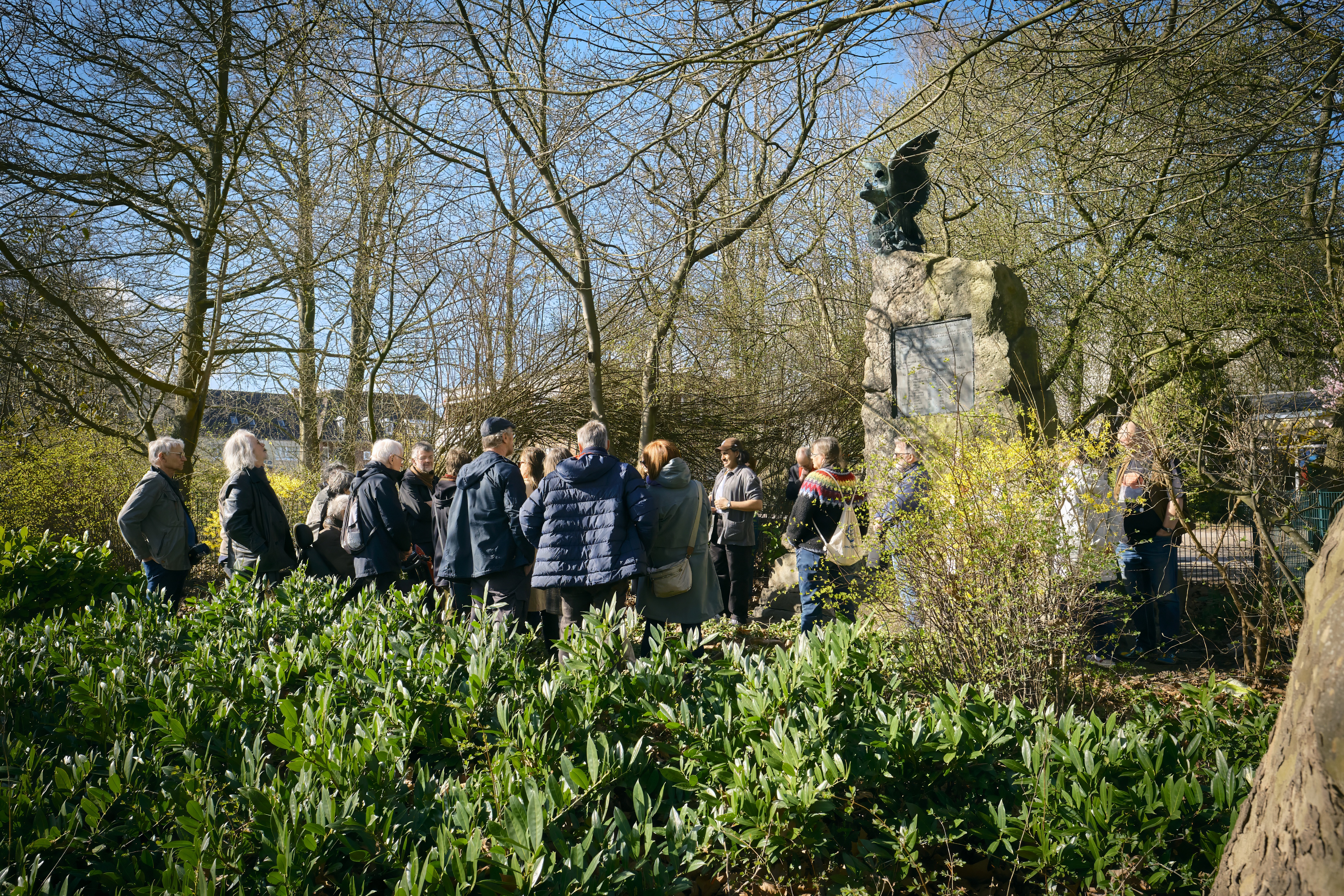
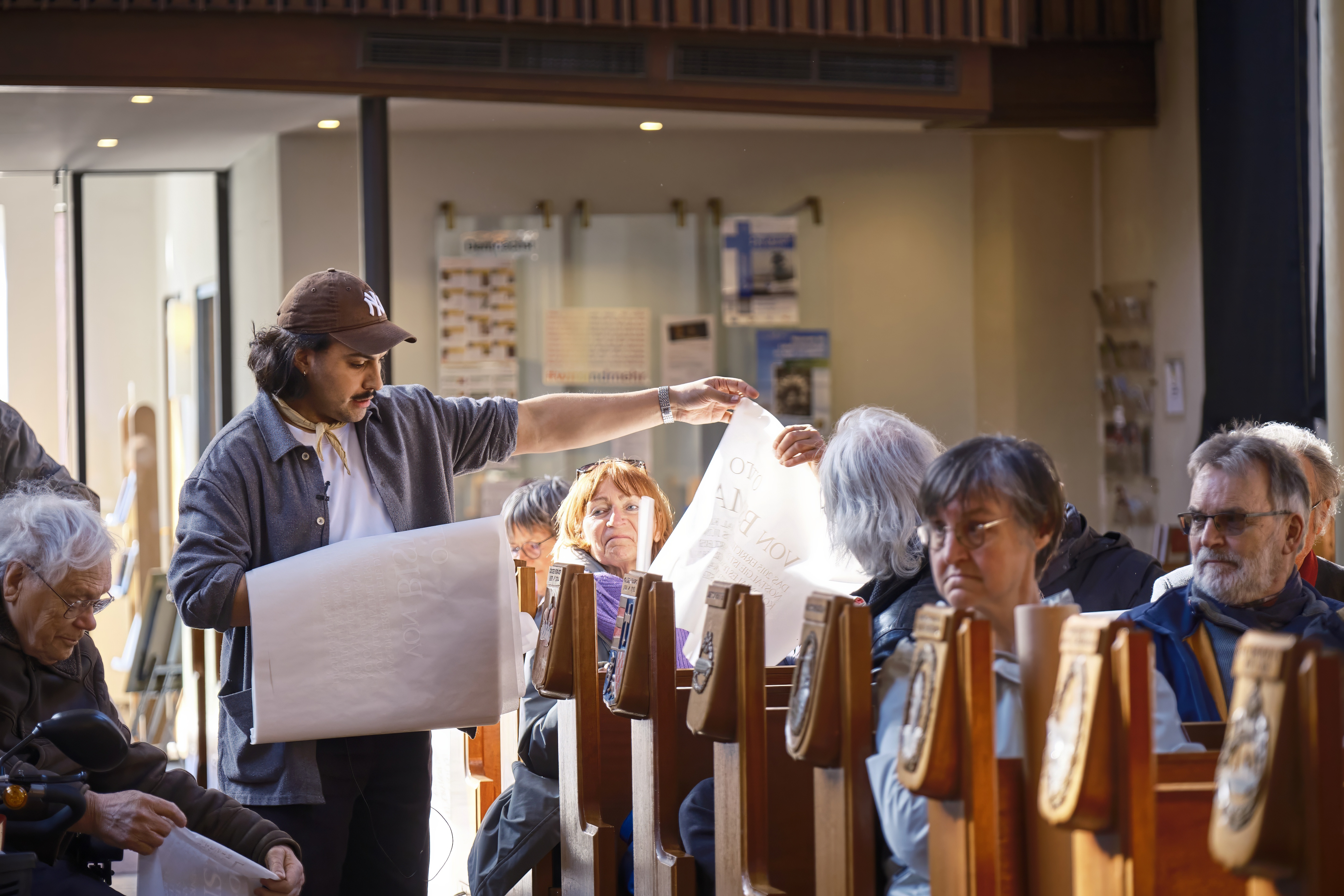
The final point of reference was the Christus and Garrison Church, where two ‘Denkwege Zeichnungen’ were displayed over marble plaques commemorating the ‘heroic death’ of German colonialism. Seven additional plaques were also covered in black felt. Through the act of covering and revealing, a critical space—the ‘colonial space of thought’—is opened, inviting reflection on how discourses and images of violence are normalized in public space. Since public space functions as a site of collective memory that produces cultural values, the gesture emphasizes the impact of these images when encountered repeatedly.
By layering texts and drawings, this approach attempts to enter and disrupt the ‘colonial space of thought’, offering alternative Fakten perspectives on history and the representation of the Other.


photographs: Jenny Rosentreter
Intervention &
City Walk
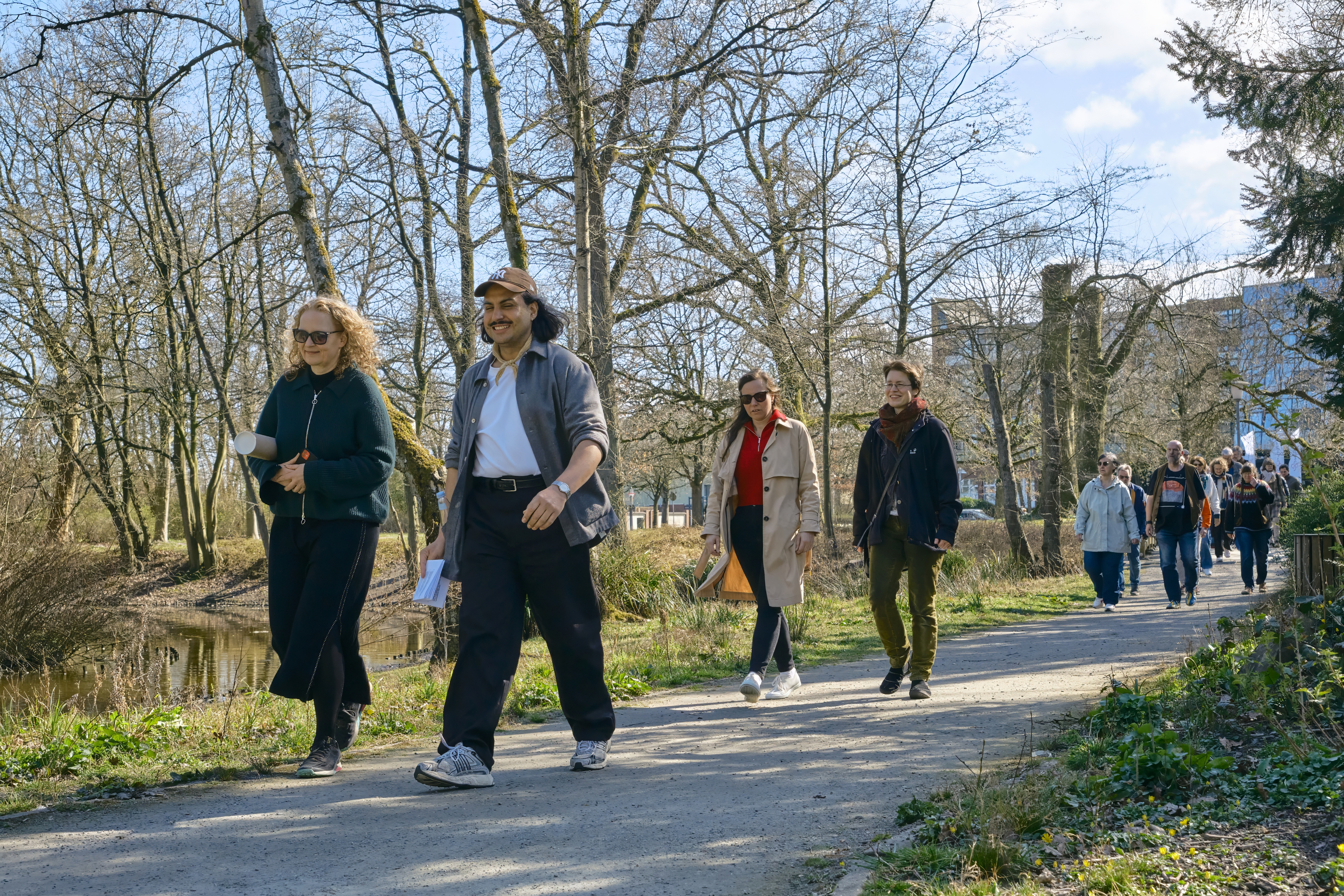
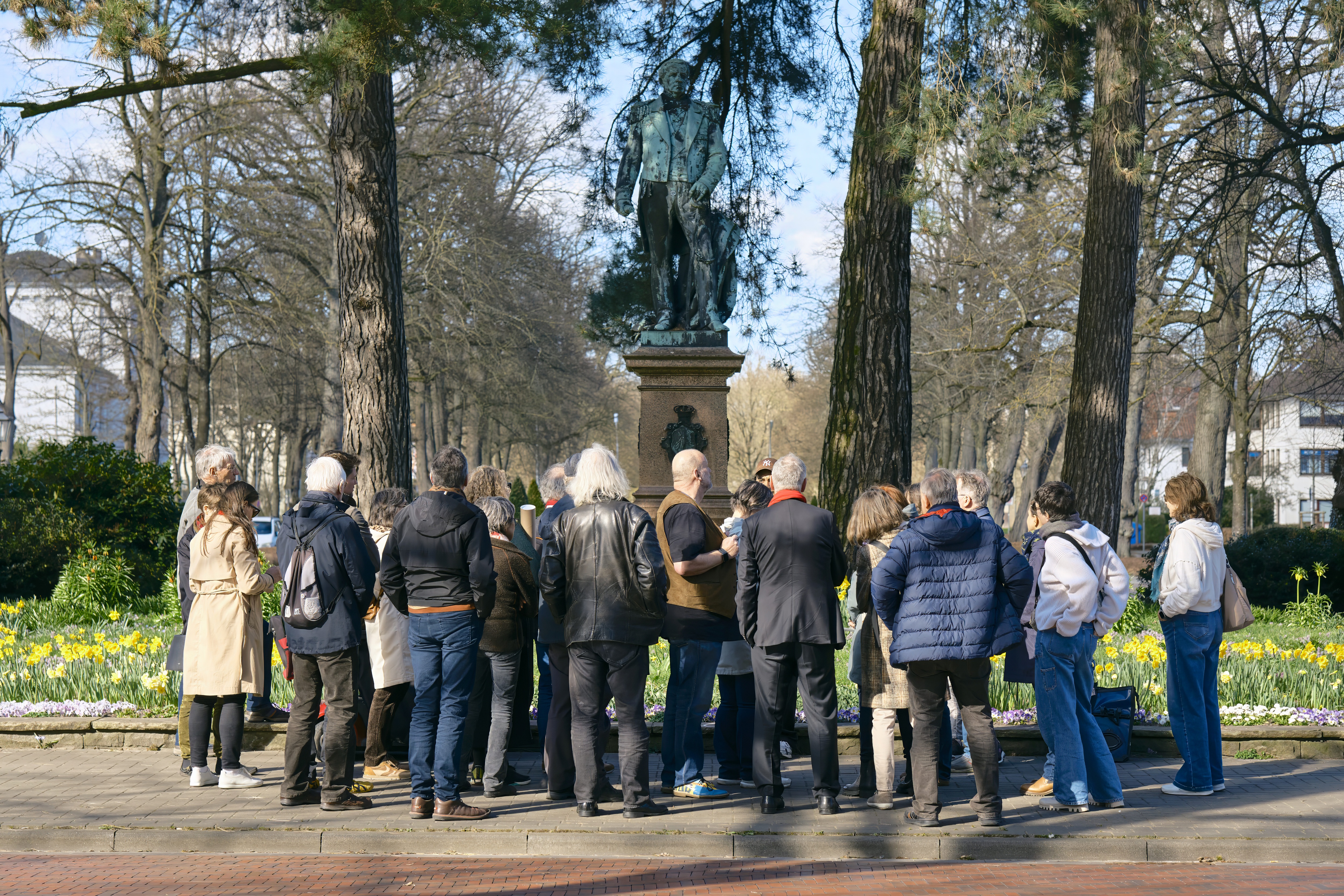
The intervention began at the Otto von Bismarck Memorial, reference point (A1), which was inaugurated in 2015 and represents a gesture of colonial nostalgia. At the site, Kervin Saint Pere covered the memorial plaque with a text printed on tissue paper that questions the official historiography of Bismarck, particularly with regard to the colonial era. From there, the tour guided visitors to monuments that represent a colonial and nostalgic narrative of the past.
The last point of reference or coordination was the Christ Church and Garrison Church, where two of the artist‘s ‘Denkwege Zeichnungen’ hang above marble plaques commemorating the ‘heroic death’ of German colonialism. Another seven marble slabs were also covered with black felt. By covering and revealing this virtual space, the artist opens up a space for reflection that invites the viewers to critically question how discourses and images of violence are normalised in public space.
The last point of reference or coordination was the Christ Church and Garrison Church, where two of the artist‘s ‘Denkwege Zeichnungen’ hang above marble plaques commemorating the ‘heroic death’ of German colonialism. Another seven marble slabs were also covered with black felt. By covering and revealing this virtual space, the artist opens up a space for reflection that invites the viewers to critically question how discourses and images of violence are normalised in public space.


photographs: Jenny Rosentreter