Archives of extractivism
Exhibition Förderpreis Junge Kunst 2025
Galerie Reinickendorf
Galerie Reinickendorf
This project examines museum archives in Berlin, Vienna, and Hamburg that contain early rubber artefacts collected from the Amazon, both before and after the invention of vulcanisation. These artefacts, such as toys, tools and shoes, reflect Europe’s early scientific and commercial fascination with this previously unknown material, which was brought back by travellers, traders and colonisers.
The archives also expose the violent histories behind rubber extraction, tied to genocide, forced labor, and colonial exploitation in regions like Putumayo and the Congo. By categorizing these artifacts within colonial systems of knowledge, the archives document not only the objects themselves but also the appropriation and transformation of Indigenous knowledge, reduced to “raw” or “primitive” materials.
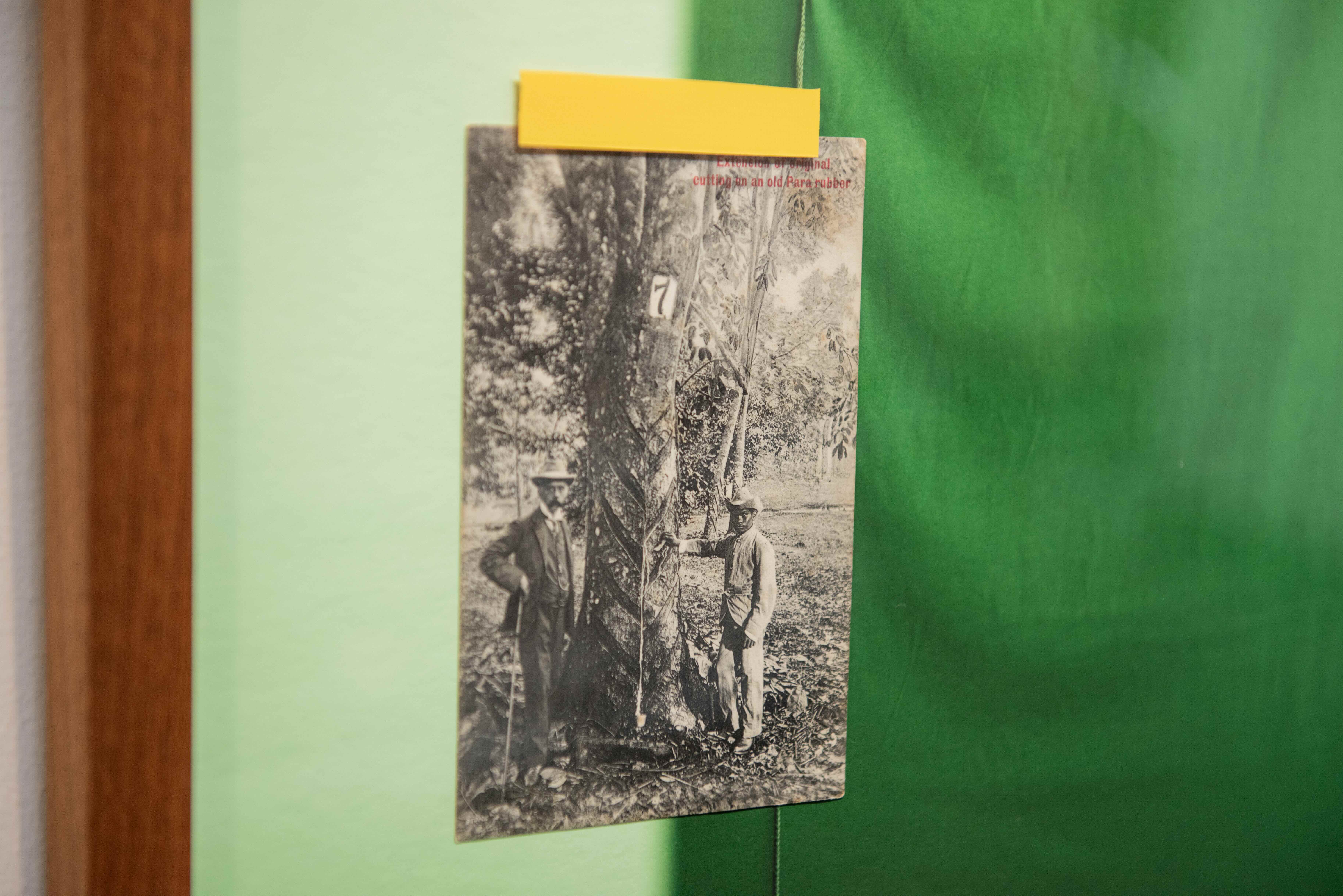
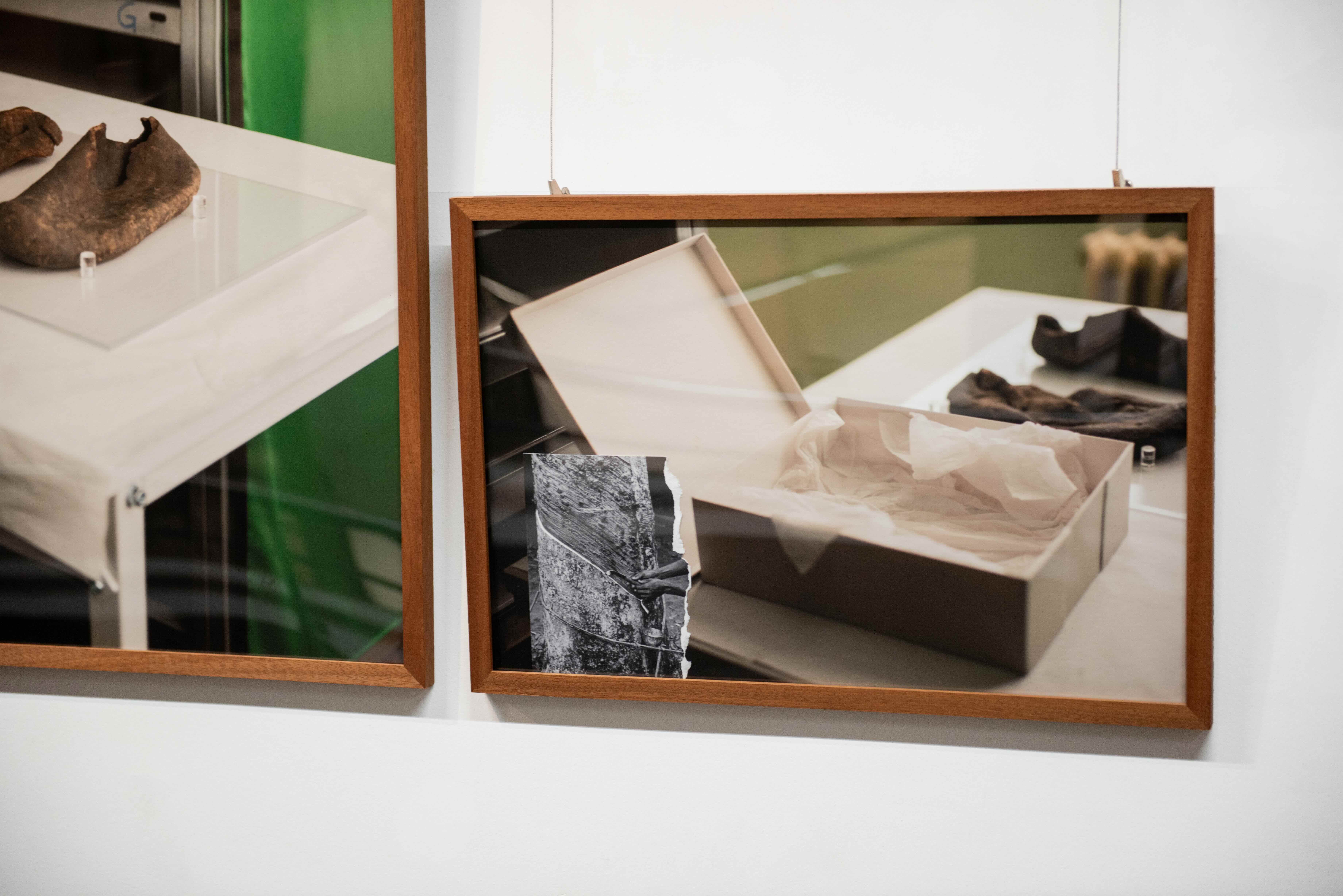
The photo series highlights these tensions by showing both the artifacts and their colonial classification structures, layered with imagery from rubber plantations. Together, these “archives of extractivism” reveal how colonial violence, material exploitation, and epistemic dispossession became embedded in archival practices.
Some of the ideas in this project on the extractivism of knowledge have already been published in the text ‘Epistemic Extractivism’. ︎︎︎
The archives also expose the violent histories behind rubber extraction, tied to genocide, forced labor, and colonial exploitation in regions like Putumayo and the Congo. By categorizing these artifacts within colonial systems of knowledge, the archives document not only the objects themselves but also the appropriation and transformation of Indigenous knowledge, reduced to “raw” or “primitive” materials.
The photo series highlights these tensions by showing both the artifacts and their colonial classification structures, layered with imagery from rubber plantations. Together, these “archives of extractivism” reveal how colonial violence, material exploitation, and epistemic dispossession became embedded in archival practices.
Some of the ideas in this project on the extractivism of knowledge have already been published in the text ‘Epistemic Extractivism’. ︎︎︎



Wilhelmshaven
as Colonial
Thought-Space
Exhibition Nordwestkunst
Kunsthalle Wilhelmshaven 2025 March
The ‘colonial space of thought’ in public space is understood as a mental or virtual realm, defined by monuments, sculptures, street names, and architectural artworks. This space is shaped by images encountered in the public sphere—seemingly unstructured, yet governed by the surviving elements of a postcolonial order.
The intervention began at the Otto von Bismarck Monument (A1), inaugurated in 2015, which represents a gesture of colonial nostalgia. At this site, the commemorative plaque was covered with a text printed on silk paper that challenged the official narrative about Bismarck’s legacy, especially his role in colonial history.
The final point of reference was the Christus and Garrison Church, where two ‘Denkwege Zeichnungen’ were displayed over marble plaques commemorating the ‘heroic death’ of German colonialism. Seven additional plaques were also covered in black felt. Through the act of covering and revealing, a critical space—the ‘colonial space of thought’—is opened, inviting reflection on how discourses and images of violence are normalized in public space. Since public space functions as a site of collective memory that produces cultural values, the gesture emphasizes the impact of these images when encountered repeatedly.
By layering texts and drawings, this approach attempts to enter and disrupt the ‘colonial space of thought’, offering alternative Fakten perspectives on history and the representation of the Other.
The intervention began at the Otto von Bismarck Monument (A1), inaugurated in 2015, which represents a gesture of colonial nostalgia. At this site, the commemorative plaque was covered with a text printed on silk paper that challenged the official narrative about Bismarck’s legacy, especially his role in colonial history.
The final point of reference was the Christus and Garrison Church, where two ‘Denkwege Zeichnungen’ were displayed over marble plaques commemorating the ‘heroic death’ of German colonialism. Seven additional plaques were also covered in black felt. Through the act of covering and revealing, a critical space—the ‘colonial space of thought’—is opened, inviting reflection on how discourses and images of violence are normalized in public space. Since public space functions as a site of collective memory that produces cultural values, the gesture emphasizes the impact of these images when encountered repeatedly.
By layering texts and drawings, this approach attempts to enter and disrupt the ‘colonial space of thought’, offering alternative Fakten perspectives on history and the representation of the Other.


photographs: Jenny Rosentreter
Intervention &
City Walk
Wilhelmshaven city centre, March 2025
The intervention began at the Otto von Bismarck Memorial, reference point (A1), which was inaugurated in 2015 and represents a gesture of colonial nostalgia. At the site, Kervin Saint Pere covered the memorial plaque with a text printed on tissue paper that questions the official historiography of Bismarck, particularly with regard to the colonial era. From there, the tour guided visitors to monuments that represent a colonial and nostalgic narrative of the past.
The last point of reference or coordination was the Christ Church and Garrison Church, where two of the artist‘s ‘Denkwege Zeichnungen’ hang above marble plaques commemorating the ‘heroic death’ of German colonialism. Another seven marble slabs were also covered with black felt. By covering and revealing this virtual space, the artist opens up a space for reflection that invites the viewers to critically question how discourses and images of violence are normalised in public space.
The last point of reference or coordination was the Christ Church and Garrison Church, where two of the artist‘s ‘Denkwege Zeichnungen’ hang above marble plaques commemorating the ‘heroic death’ of German colonialism. Another seven marble slabs were also covered with black felt. By covering and revealing this virtual space, the artist opens up a space for reflection that invites the viewers to critically question how discourses and images of violence are normalised in public space.
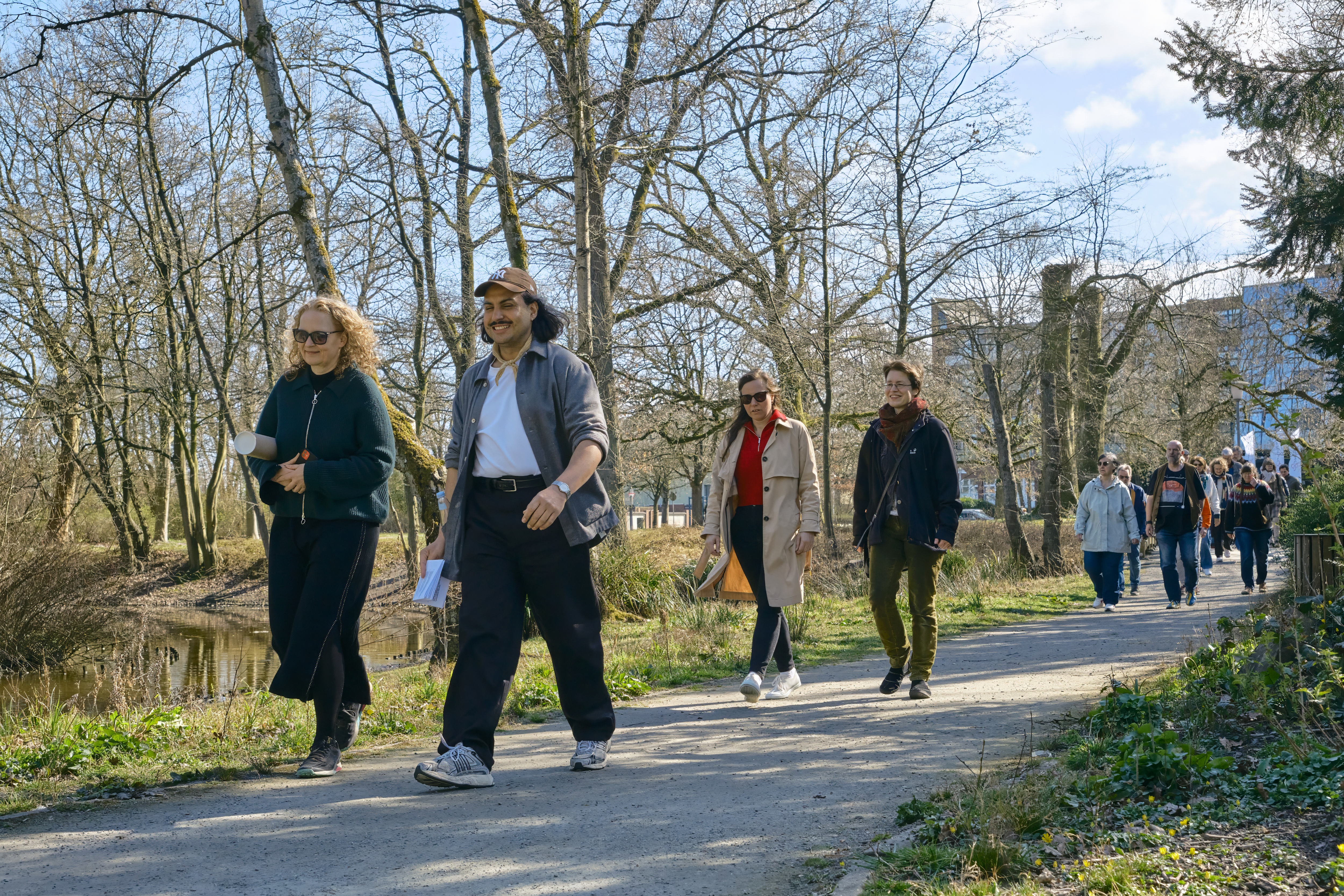
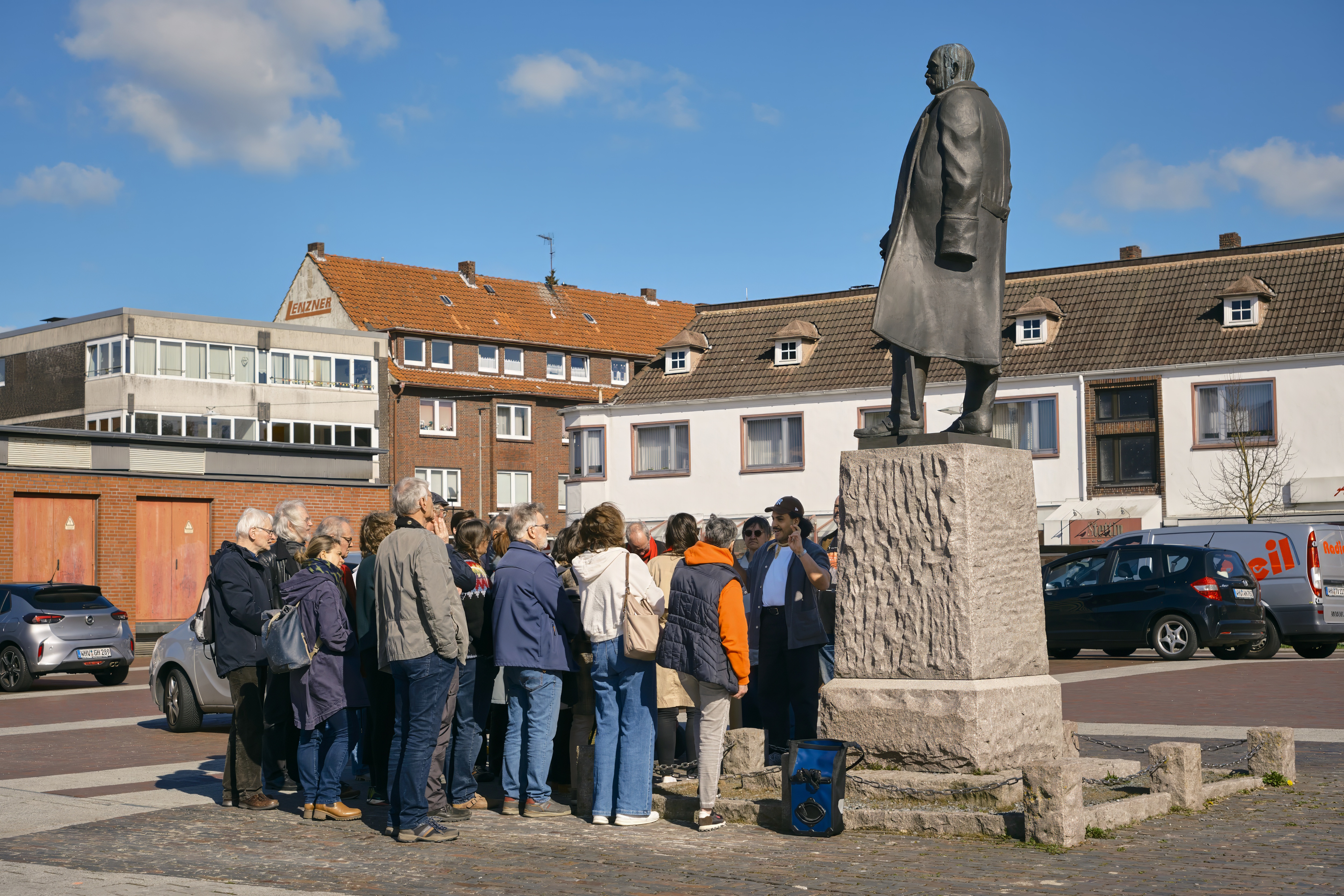
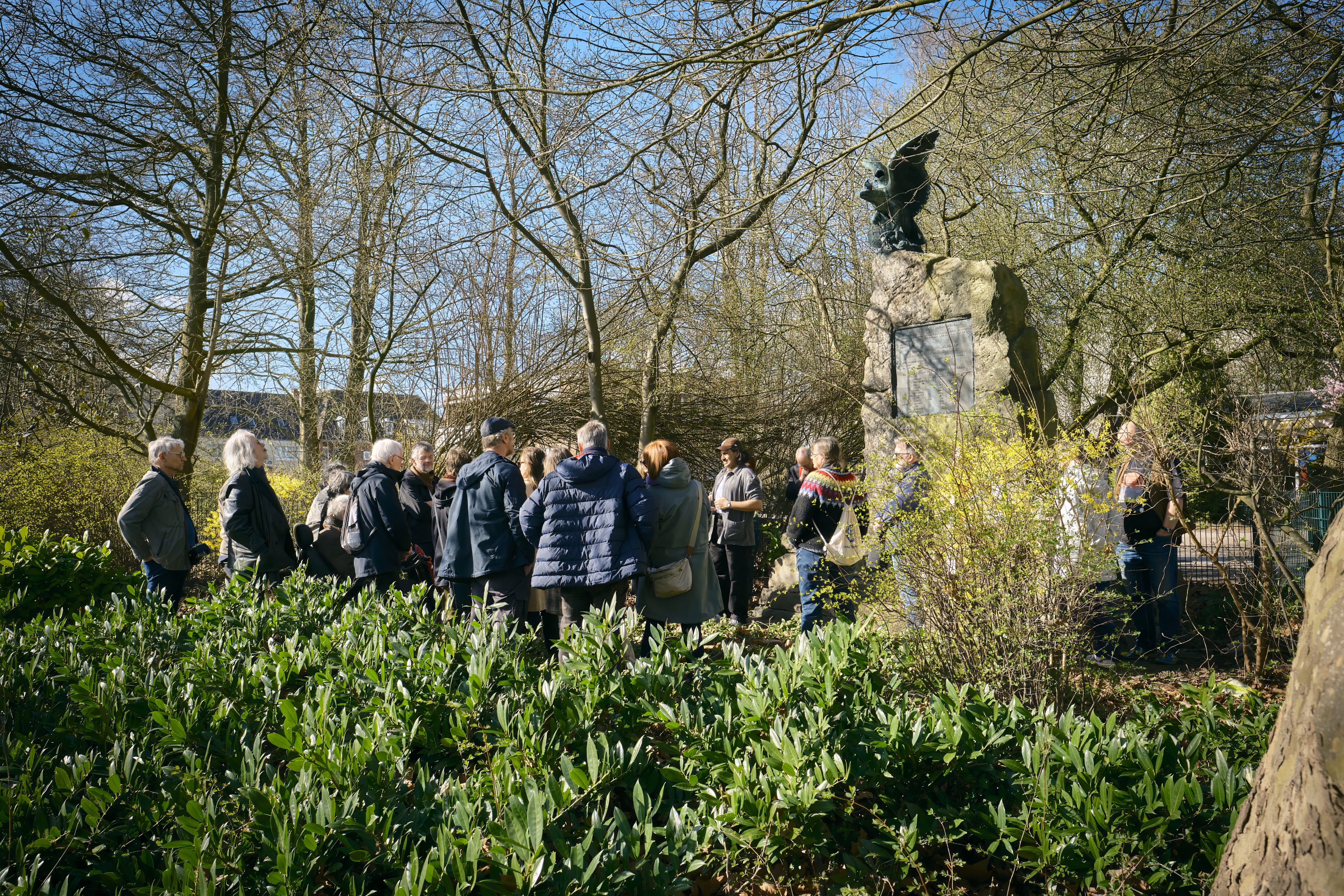
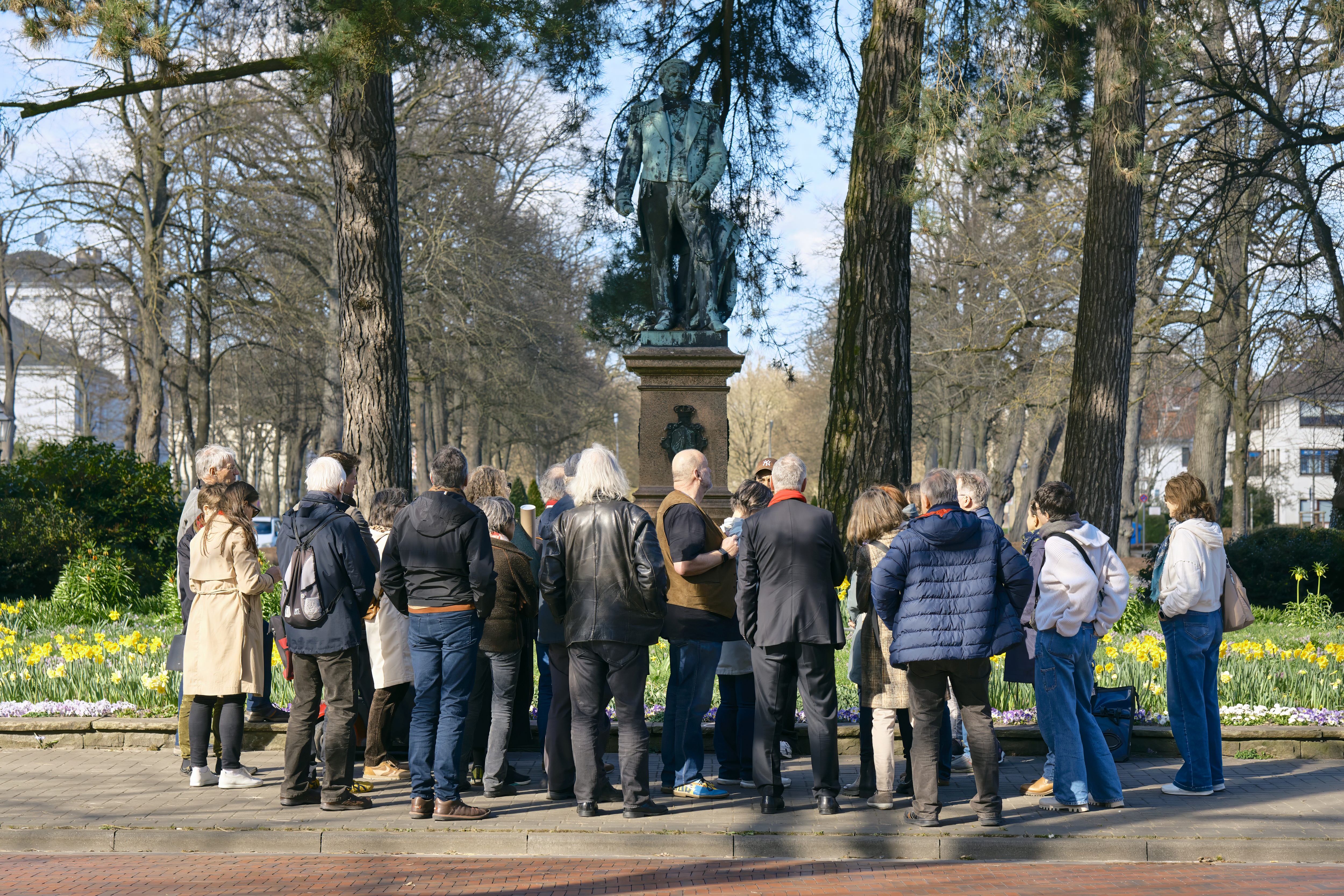


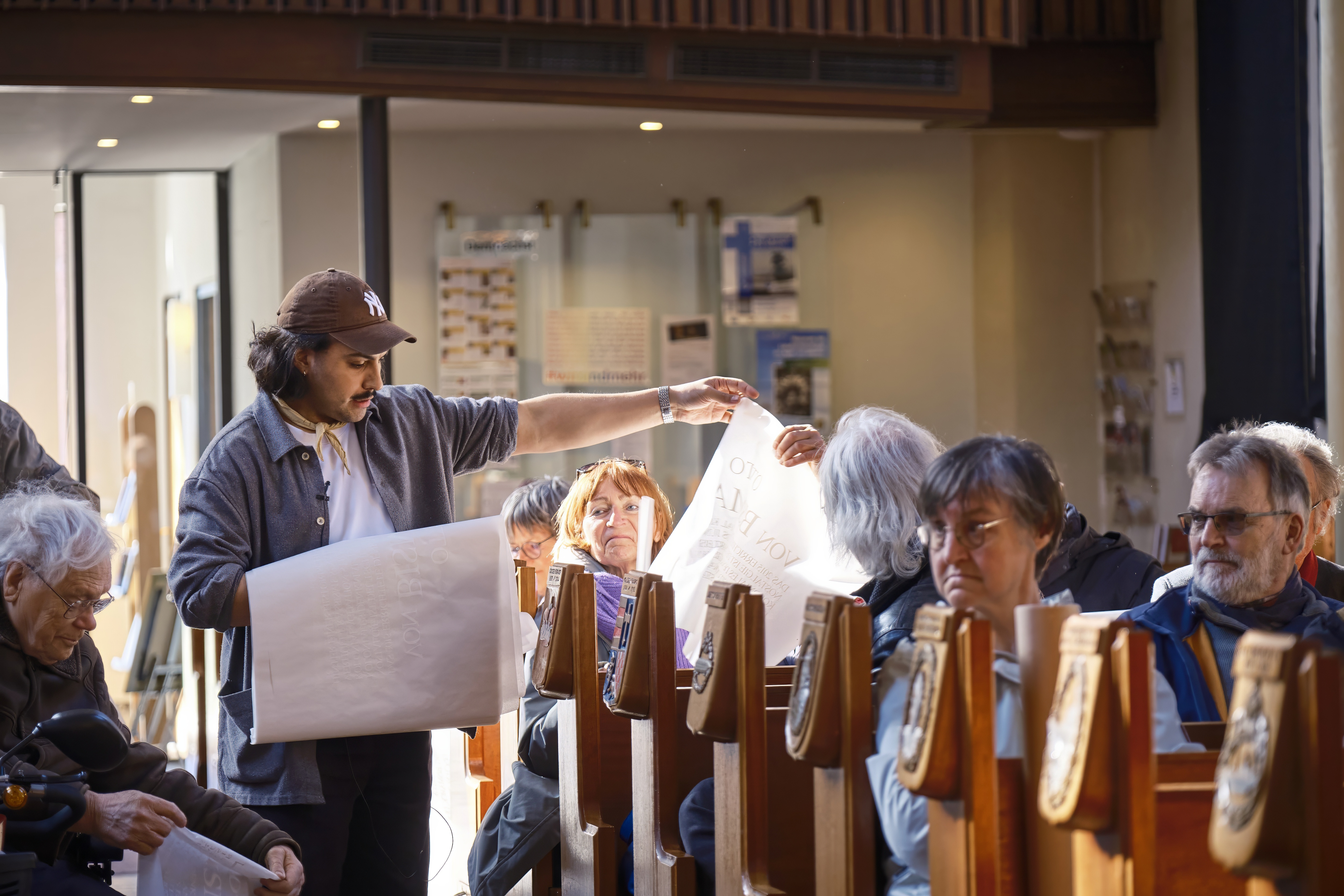
photographs: Jenny Rosentreter
Emil Nolde and the afterlife of colonialism
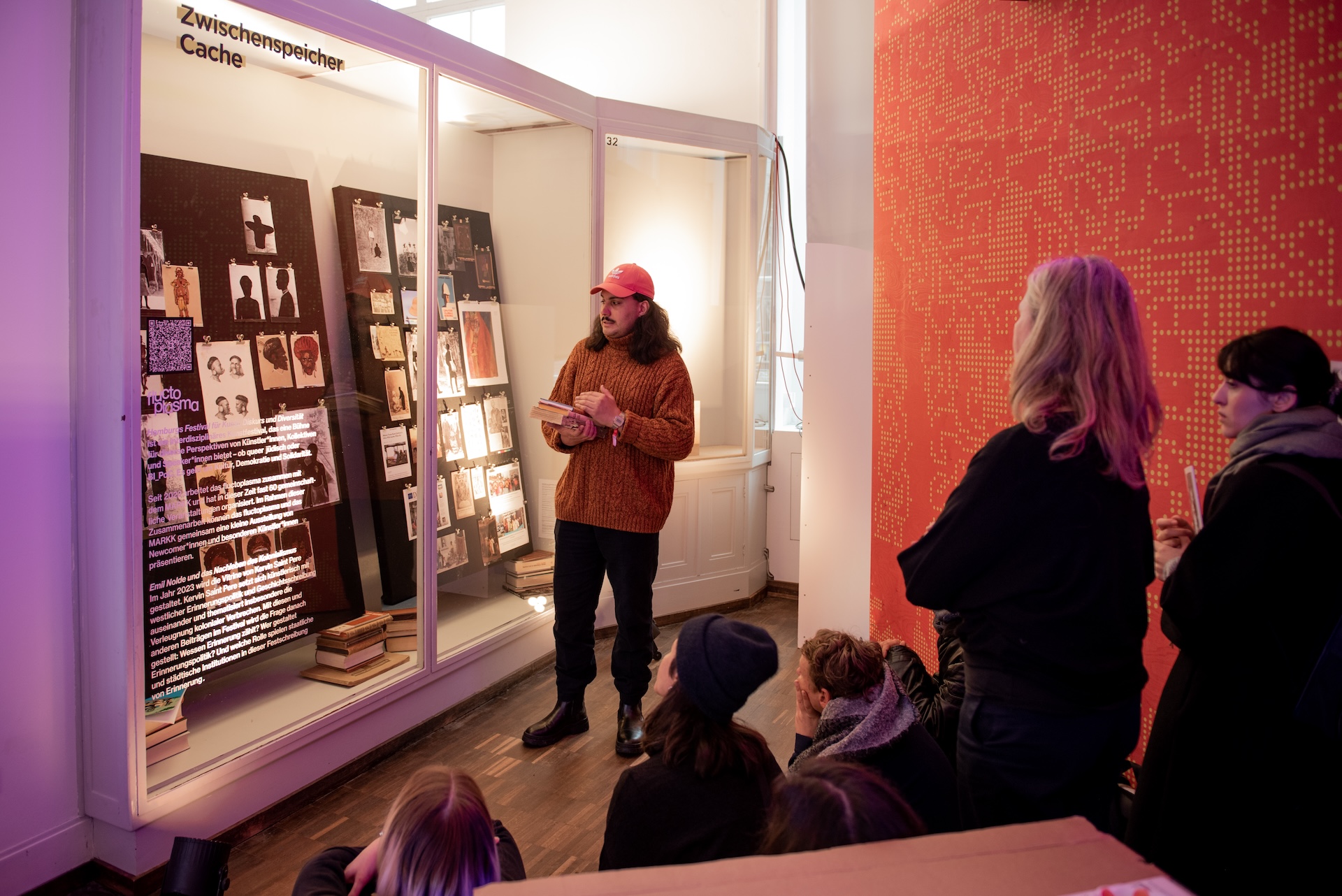
Installation in the ‘Zwischenraum’
of the MARKK Museum, 2023
of the MARKK Museum, 2023
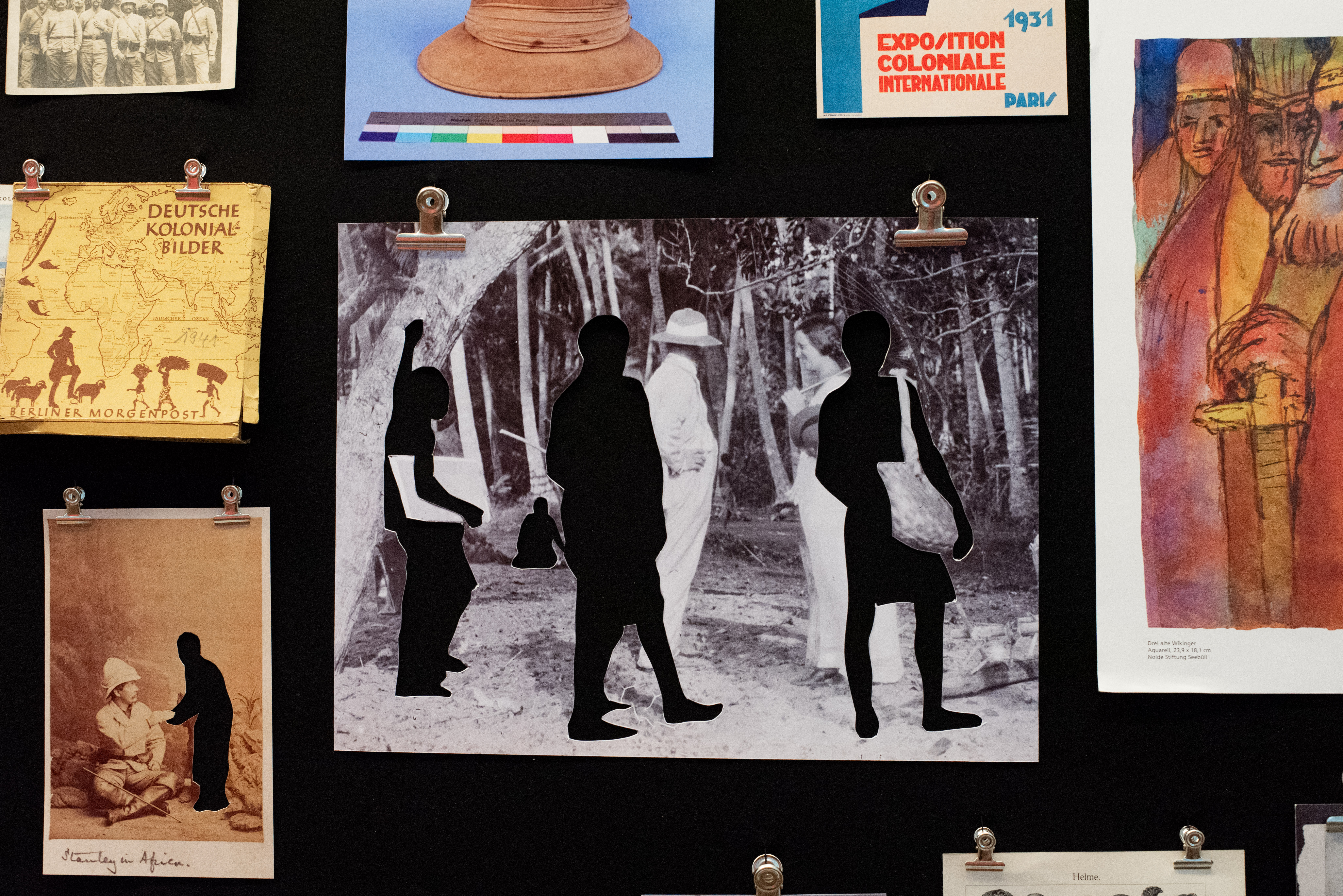
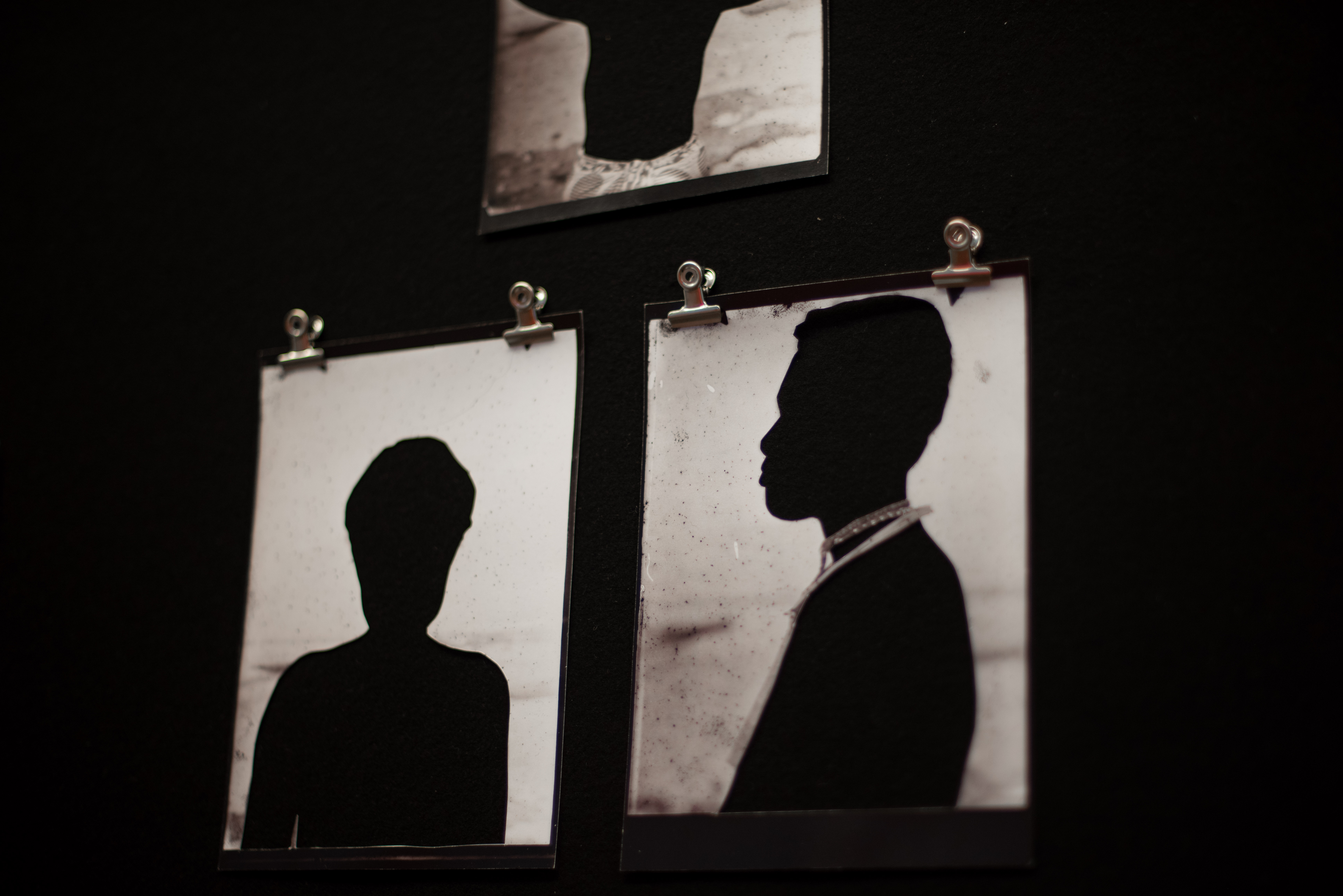
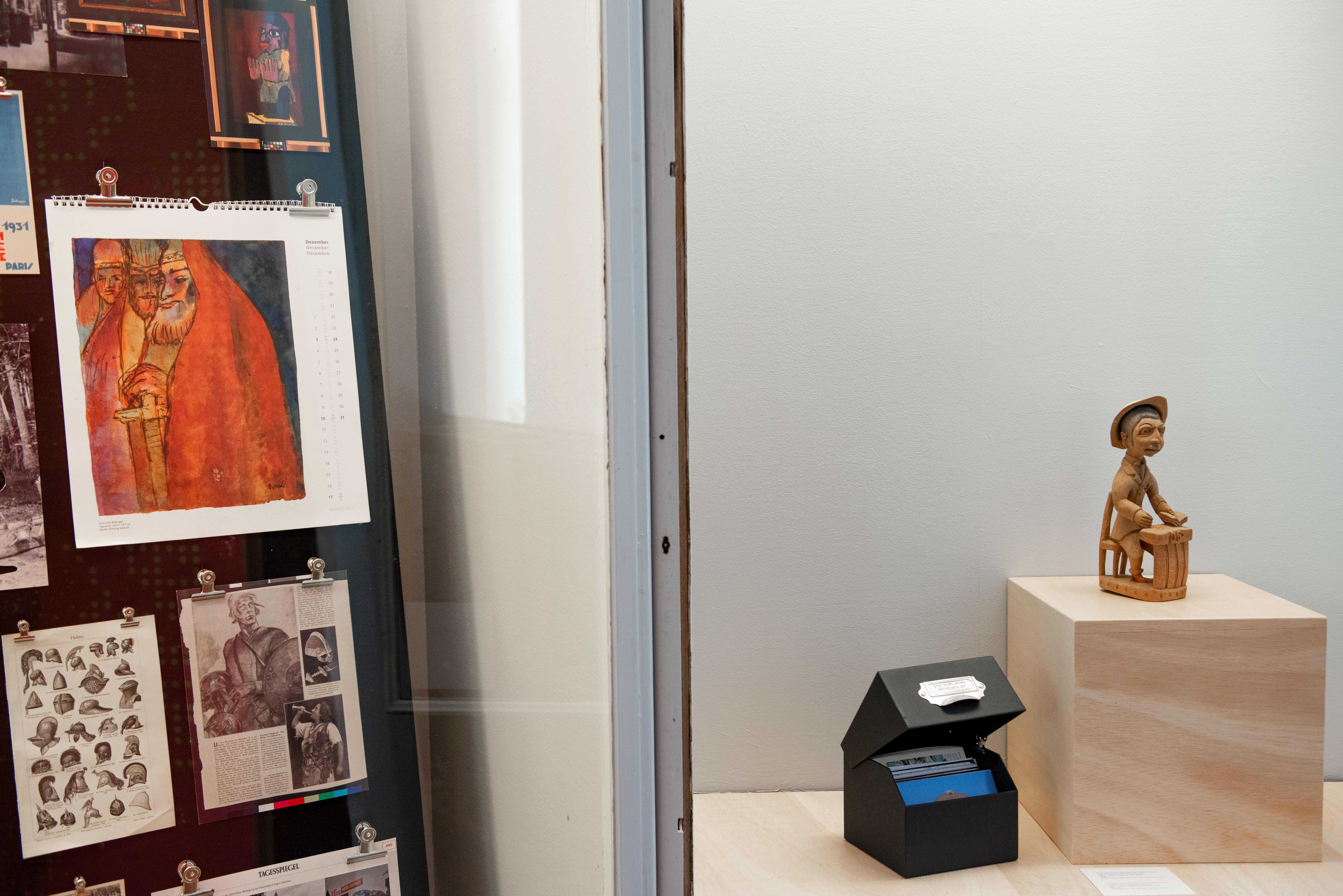
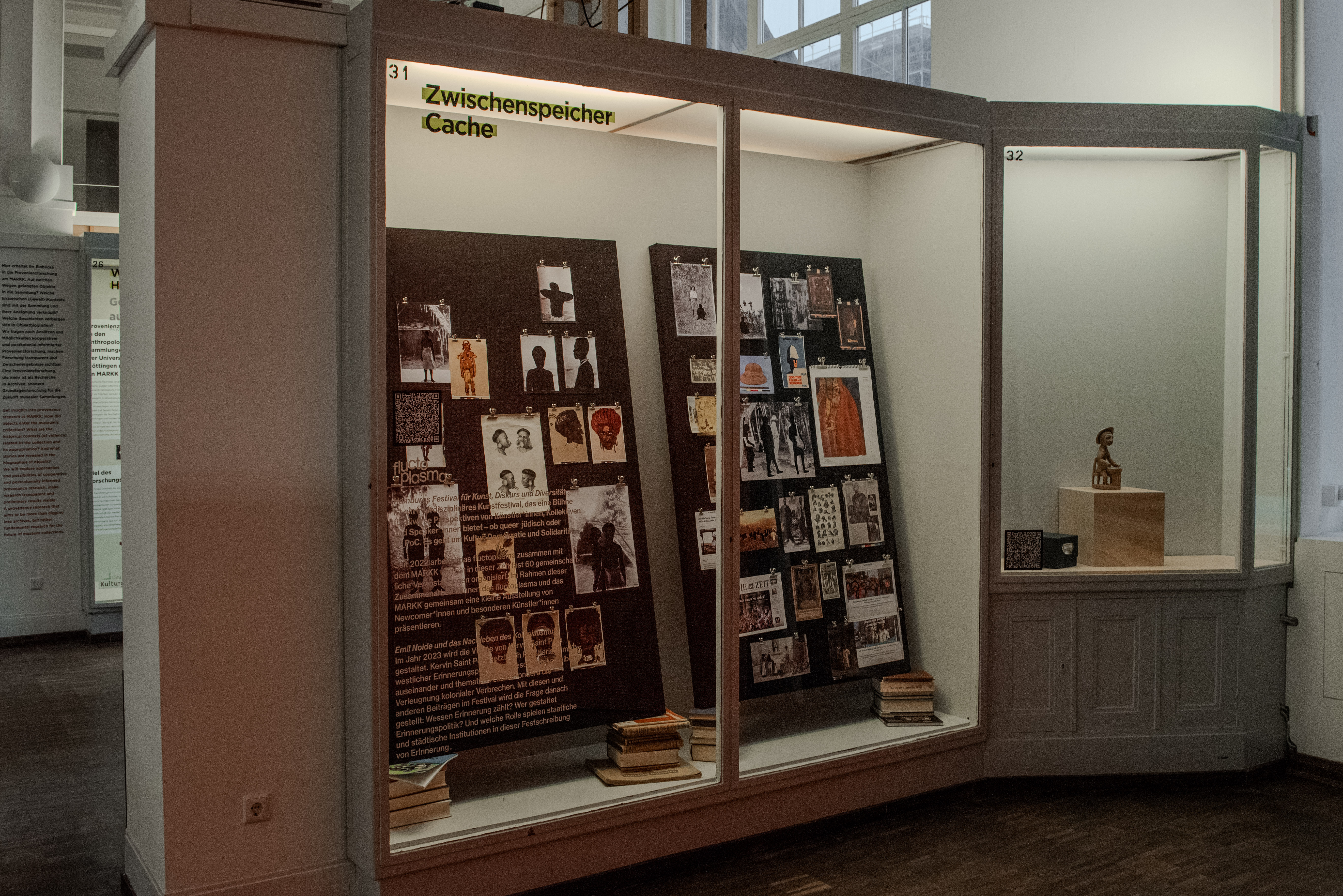
In 2019, a box from the colonial ‘Medical-Demographic German New Guinea Expedition’ , in which Emil Nolde took part, was found in the MARKK archive. In these newly discovered, not yet archived pictures, Emil Nolde can be seen wearing a colonial helmet, as the colonial officials did. From my point of view, he thus casts light and shadows of the past into our time.
But have we ever asked ourselves what it meant to wear a colonial helmet back then? Nolde, after all, lived at a time when racial theories formed a legal and intellectual basis for the problems and institutional violence in which many migrants lived. Nolde is depicted in the photograph wearing a colonial helmet, a characteristic element of the colonial masters in the former colonies, a symbol of power, a symbol of racial difference and ethnic superiority.
This observation is not new, as a contemporary of Nolde, a Nigerian artist named Thomas Ona Odulate, who lived in Nigeria and also experienced the British occupation, used the sculpting techniques of the region to portray Europeans in wooden sculptures as well as their clothing and accessories.This observation is not new, as a contemporary of Nolde, a Nigerian artist named Thomas Ona Odulate, who lived in Nigeria and also experienced the British occupation, used the sculpting techniques of the region to portray Europeans in wooden sculptures as well as their clothing and accessories.
The Installation was part of the Fluctoplasma Festival in the ‘Zwischenraum’ of the MARKK Museum.
But have we ever asked ourselves what it meant to wear a colonial helmet back then? Nolde, after all, lived at a time when racial theories formed a legal and intellectual basis for the problems and institutional violence in which many migrants lived. Nolde is depicted in the photograph wearing a colonial helmet, a characteristic element of the colonial masters in the former colonies, a symbol of power, a symbol of racial difference and ethnic superiority.
This observation is not new, as a contemporary of Nolde, a Nigerian artist named Thomas Ona Odulate, who lived in Nigeria and also experienced the British occupation, used the sculpting techniques of the region to portray Europeans in wooden sculptures as well as their clothing and accessories.This observation is not new, as a contemporary of Nolde, a Nigerian artist named Thomas Ona Odulate, who lived in Nigeria and also experienced the British occupation, used the sculpting techniques of the region to portray Europeans in wooden sculptures as well as their clothing and accessories.
The Installation was part of the Fluctoplasma Festival in the ‘Zwischenraum’ of the MARKK Museum.

The White
Background
Lecture Performance
AIL, Kassenhalle Postsparkasse, 2023
AIL, Kassenhalle Postsparkasse, 2023
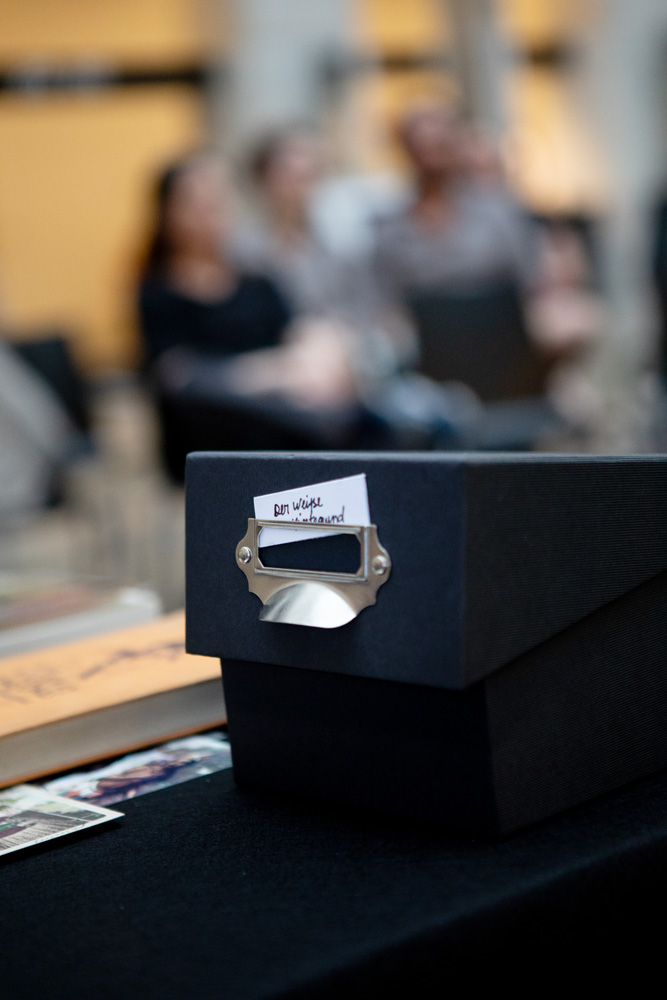
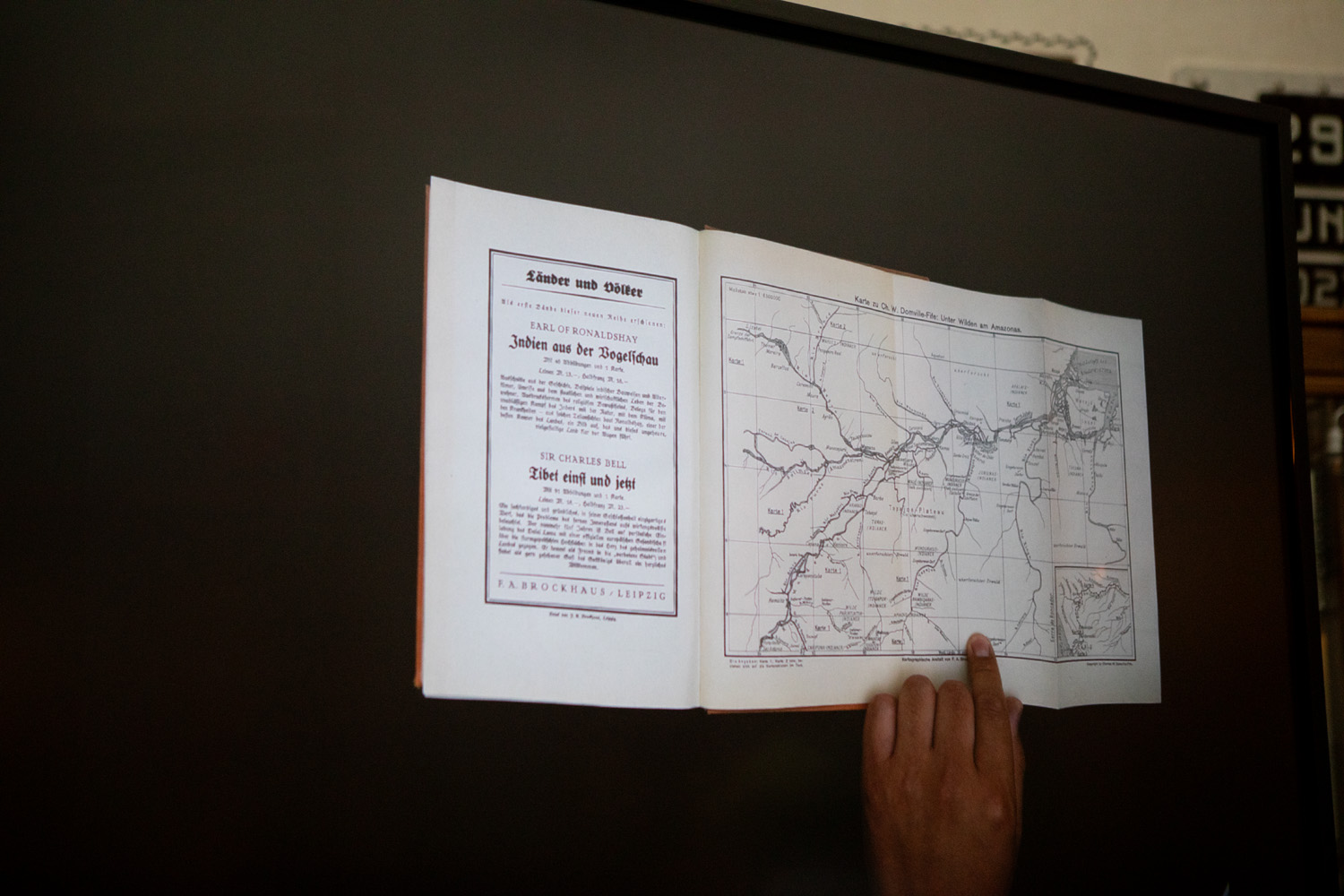
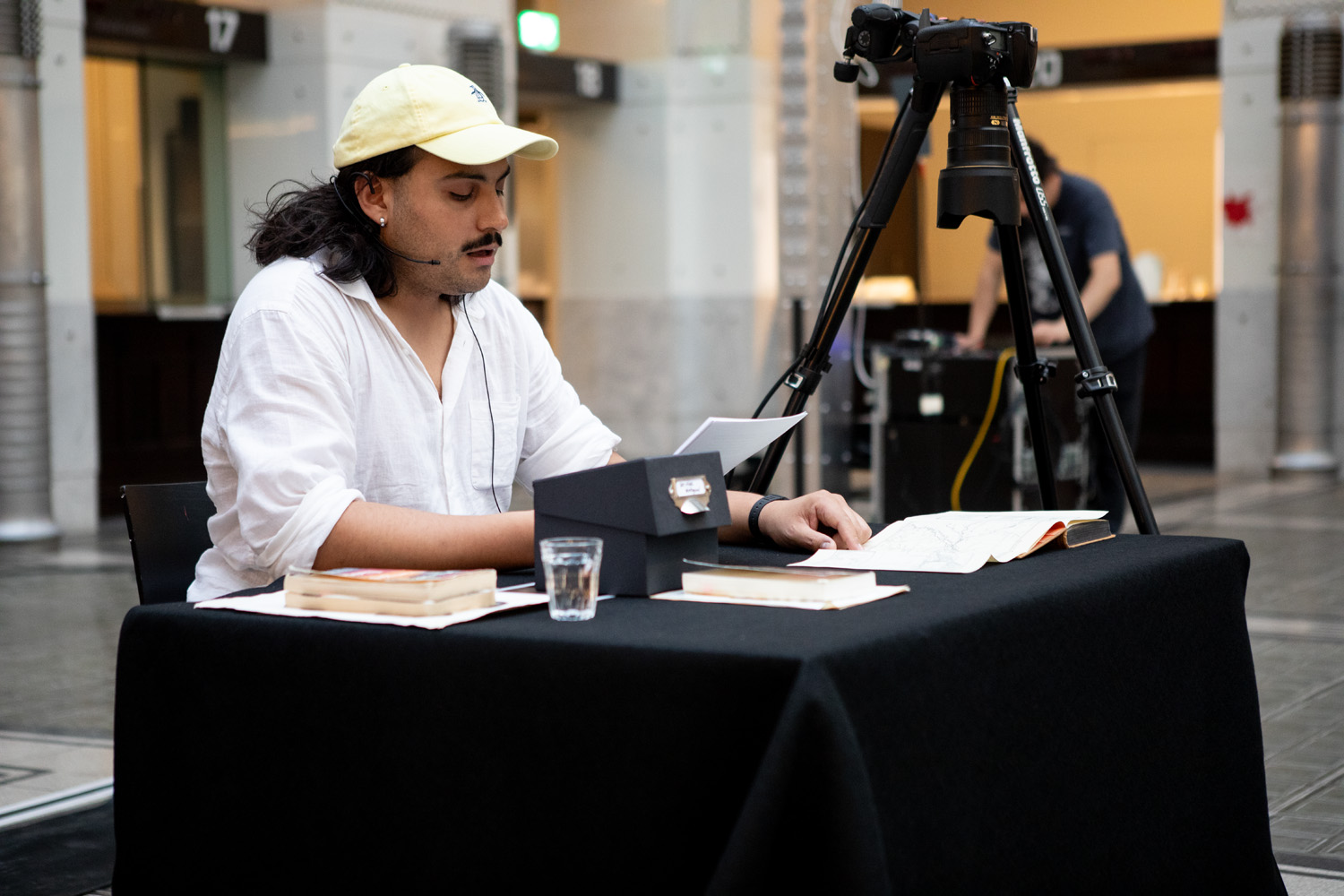
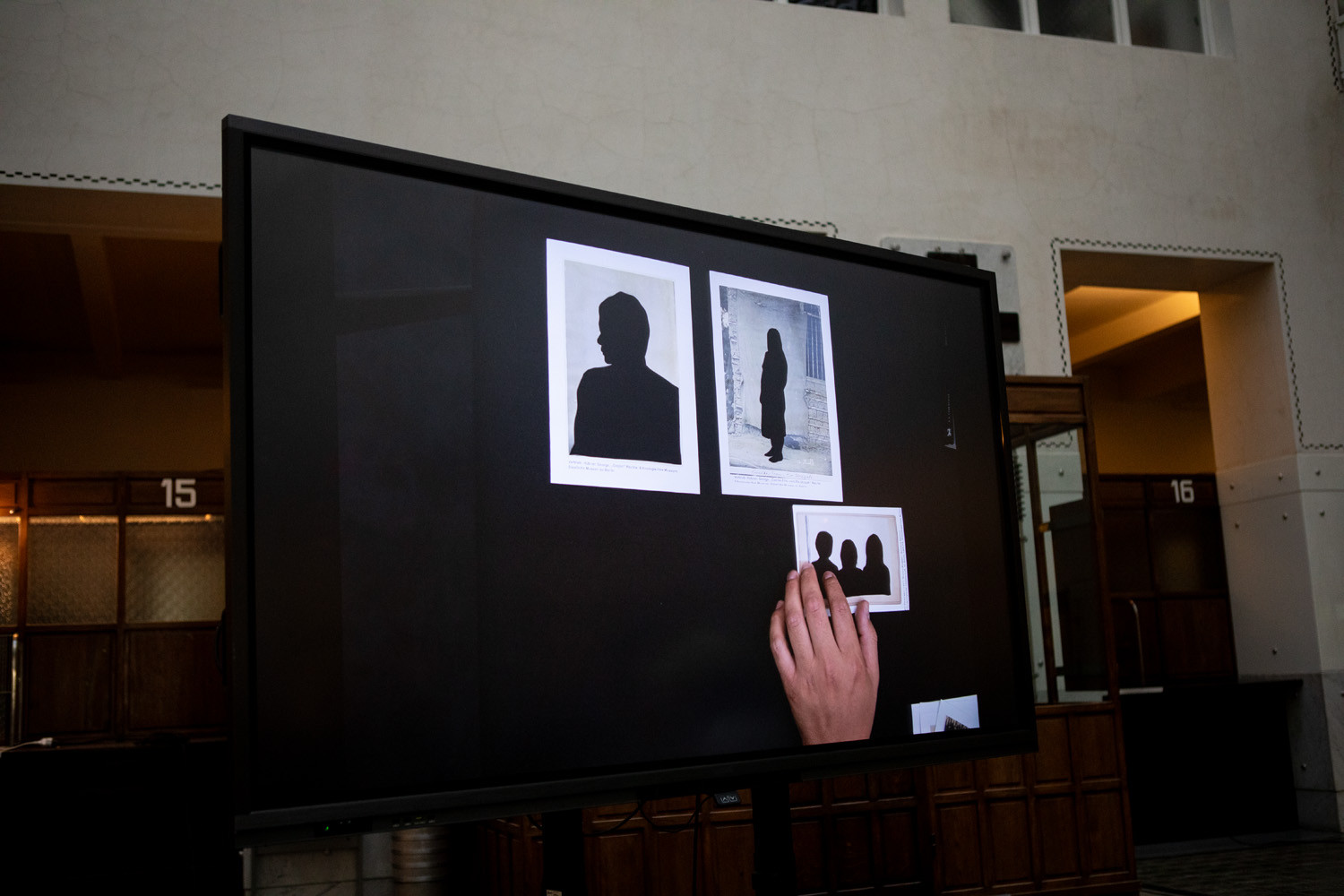
Under the inventory number: 2260 and the storage location: K5570, they are registered as: ‘OBJECT’, in the collection group: ‘Natural materials‘ under the so-called title: ‘1 pair of raw rubber shoes’. This type of archiving in the Technisches Museum Wien is the surviving testimony to colonialism and the various faces of extractivism. One of these faces is the rubber known at the time as ‘white gold’, the extraction of which is responsible for genocide and yet represents only part of the colonial and post-colonial violence perpetrated in the Amazon region.
In addition to physical violence and its culmination in genocide, other violent strategies were also carried out, representing epistemic extractivism and epistemicide.
The lecture performance establishes a dialogue between selected images, their archives and their afterlife as well as their extractivist mechanisms. It explores the question of which types of representations historically served the exploitation of the Other and were used for the extractivism ofrubber. The lecture performance was shown forthe first time in the public programme of Angewandte Festival, exhibition: ‘stretching across time and space- On the coloniality of objects and projects‘.
In addition to physical violence and its culmination in genocide, other violent strategies were also carried out, representing epistemic extractivism and epistemicide.
The lecture performance establishes a dialogue between selected images, their archives and their afterlife as well as their extractivist mechanisms. It explores the question of which types of representations historically served the exploitation of the Other and were used for the extractivism ofrubber. The lecture performance was shown forthe first time in the public programme of Angewandte Festival, exhibition: ‘stretching across time and space- On the coloniality of objects and projects‘.

The City of Hamburg and
the Afterlife of
Colonialism
Installation
Hamburger Bahnhof Berlin, 2022
Hamburger Bahnhof Berlin, 2022
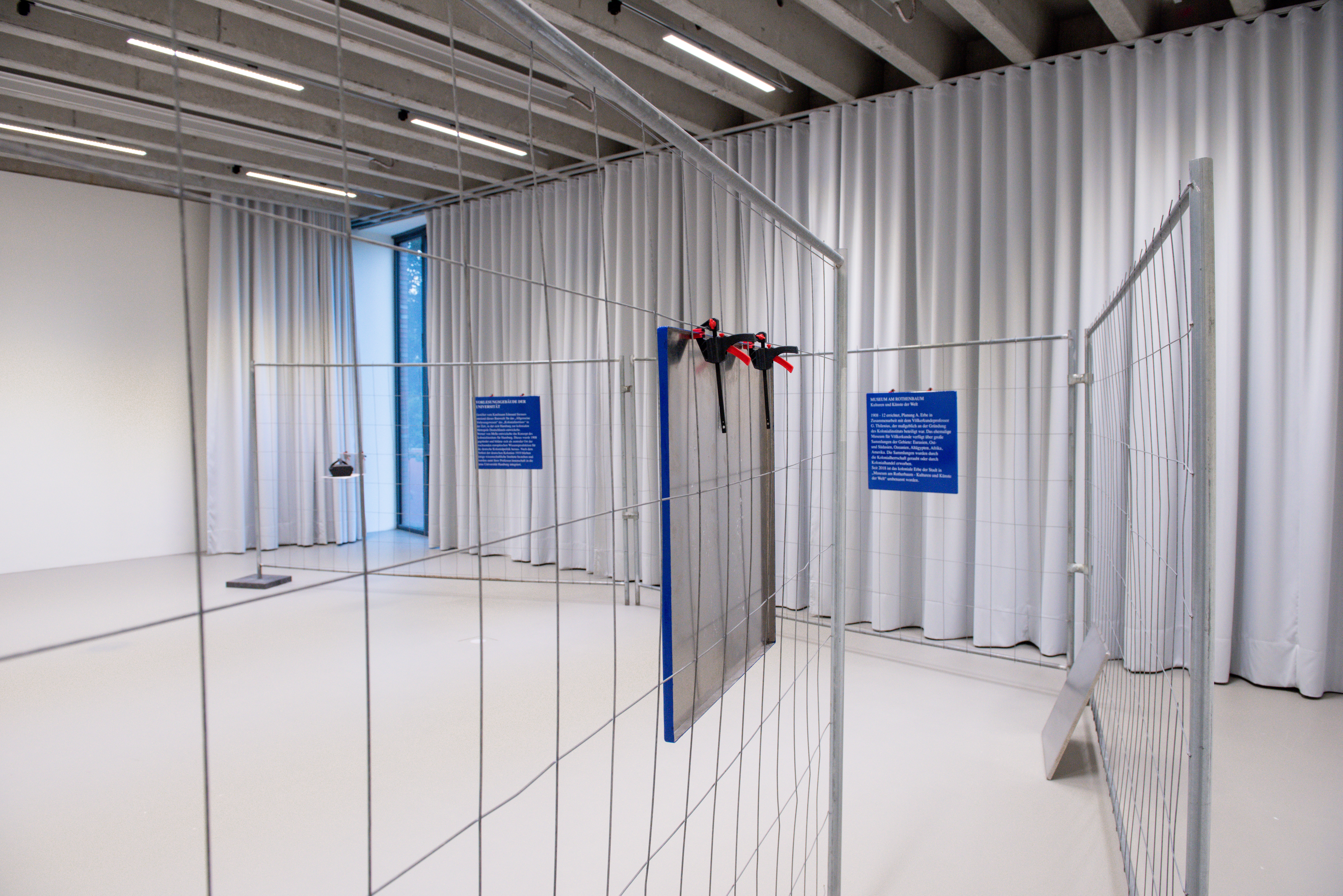
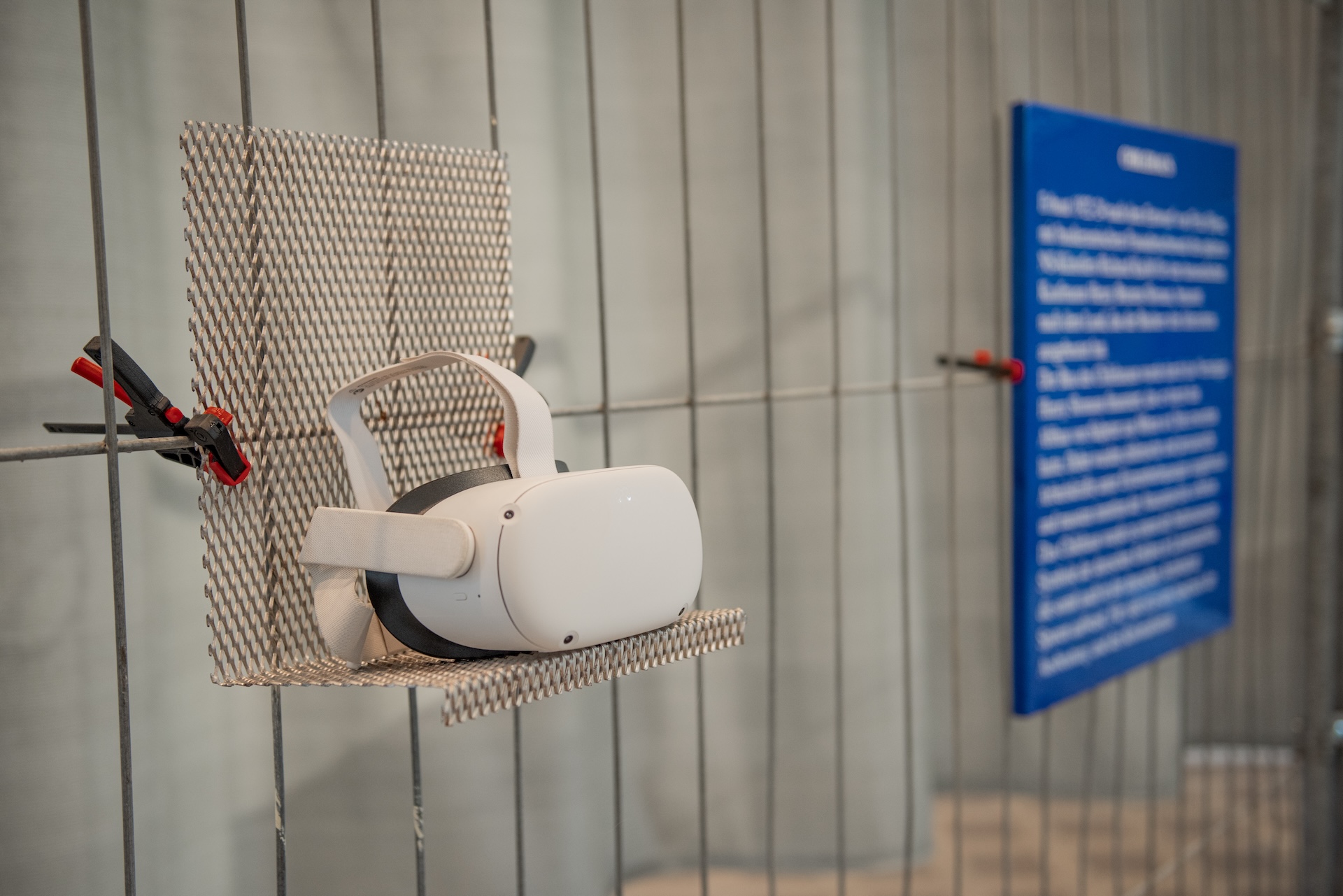
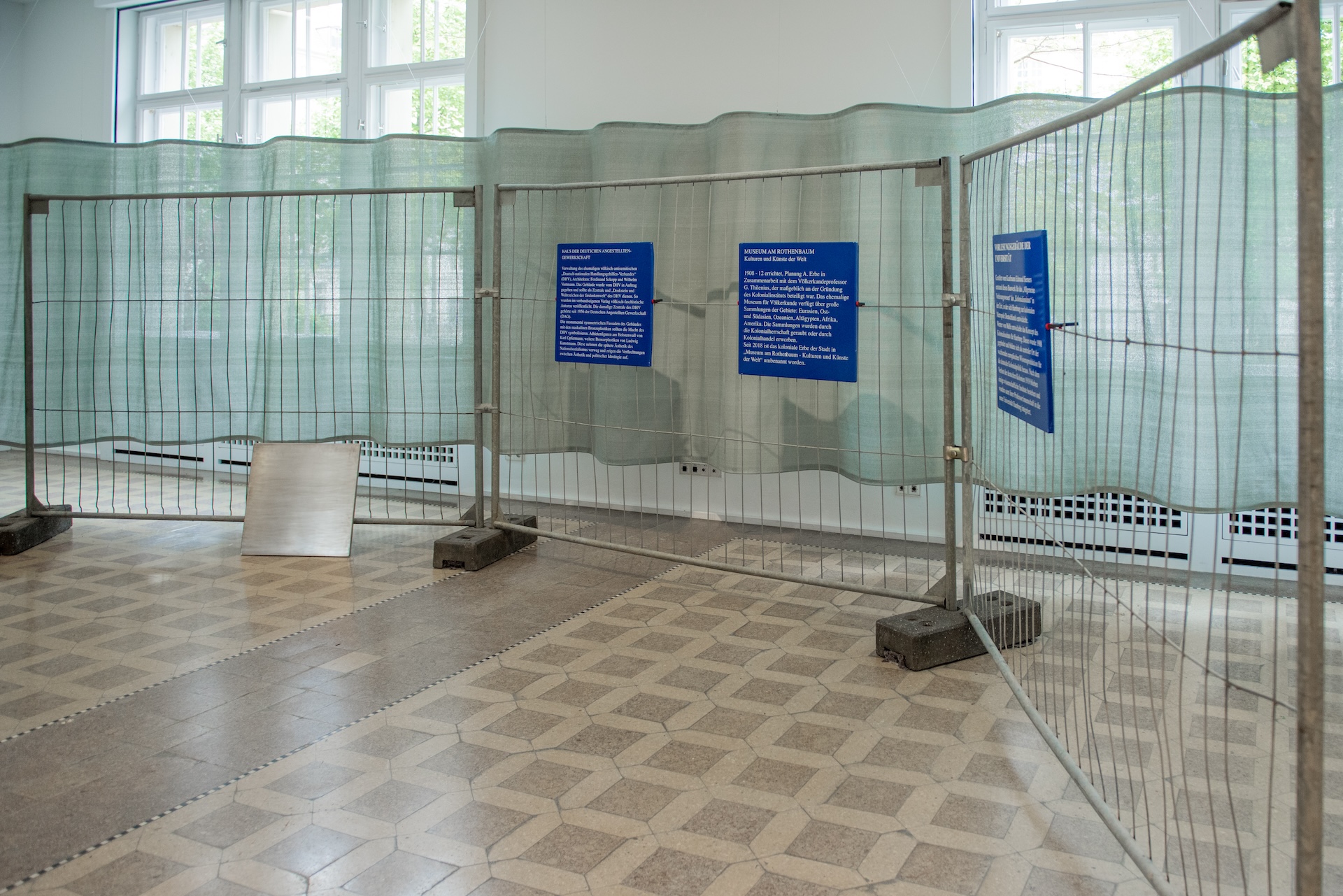
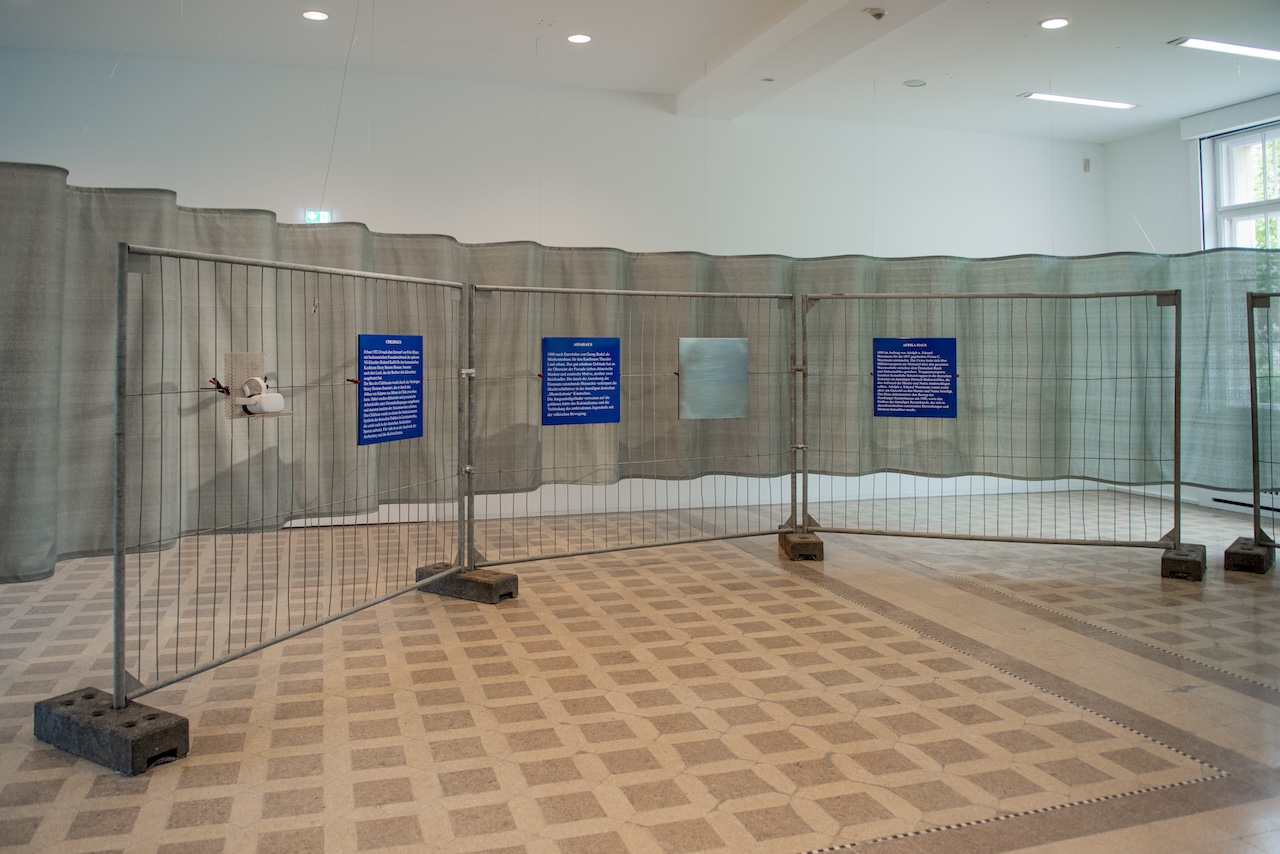
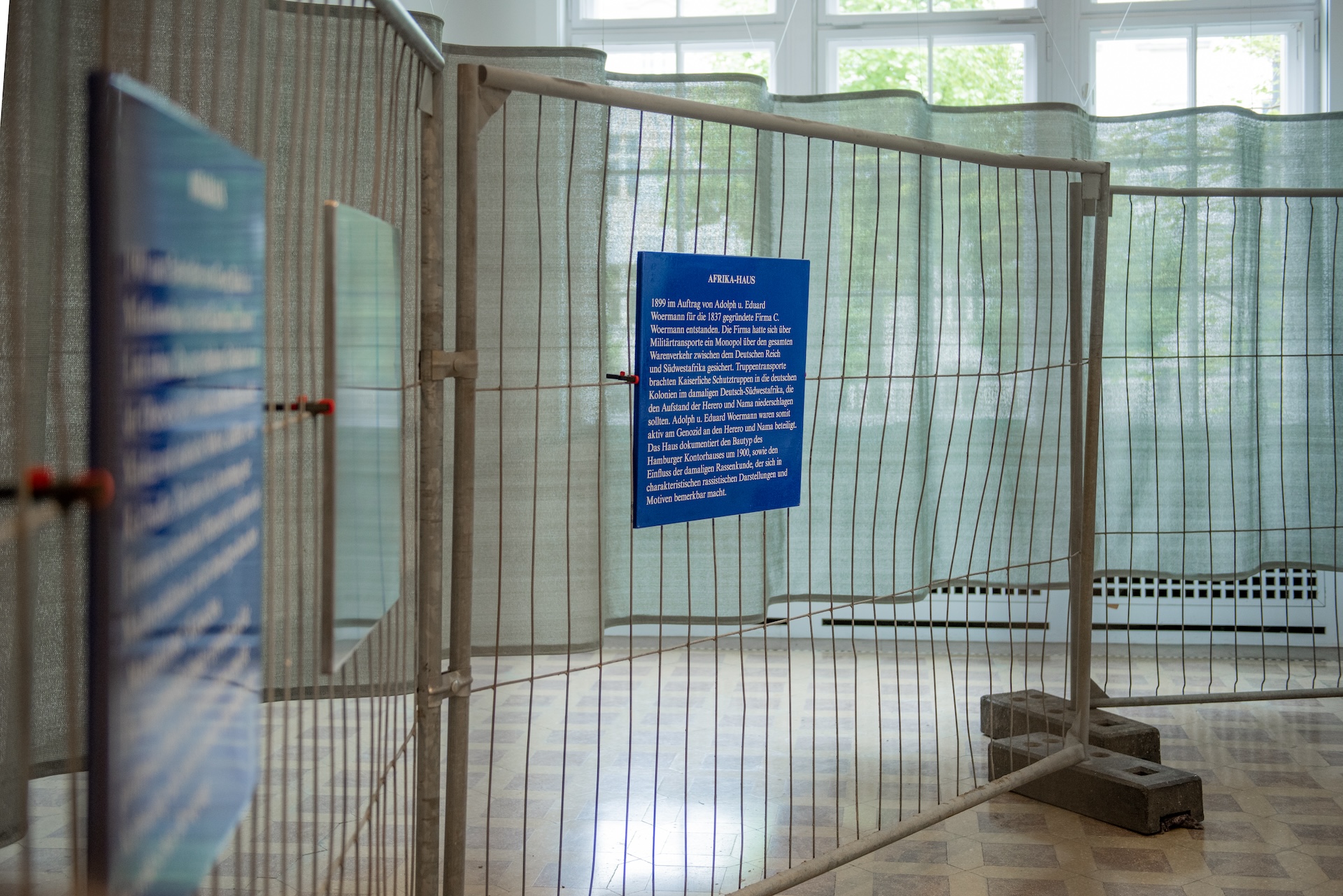
In the city of Hamburg, one can discover not only traces of the former colonial metropolis, but also traces of thought patterns that still exist, which have survived and have not ceased to exist - the «coloniality of power» (Aníbal Quijano). Part of these structures can be found - along with the representations of the last century, which are now part of the cultural heritage - in the forms of selective remembrance and conscious forgetting of history, which the city’s plaques of the cultural monuments (Kulturdenkmaltafel) recount.
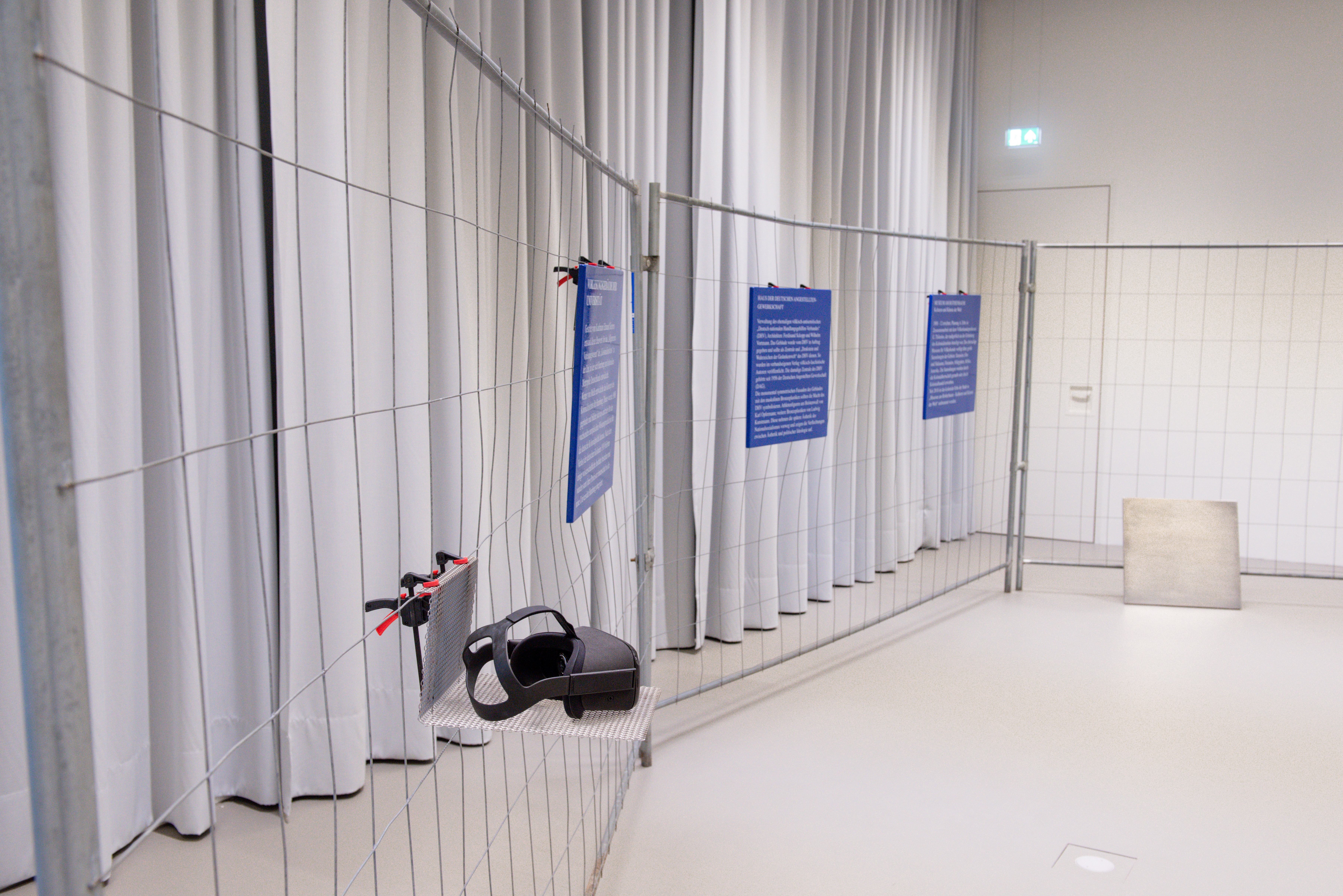
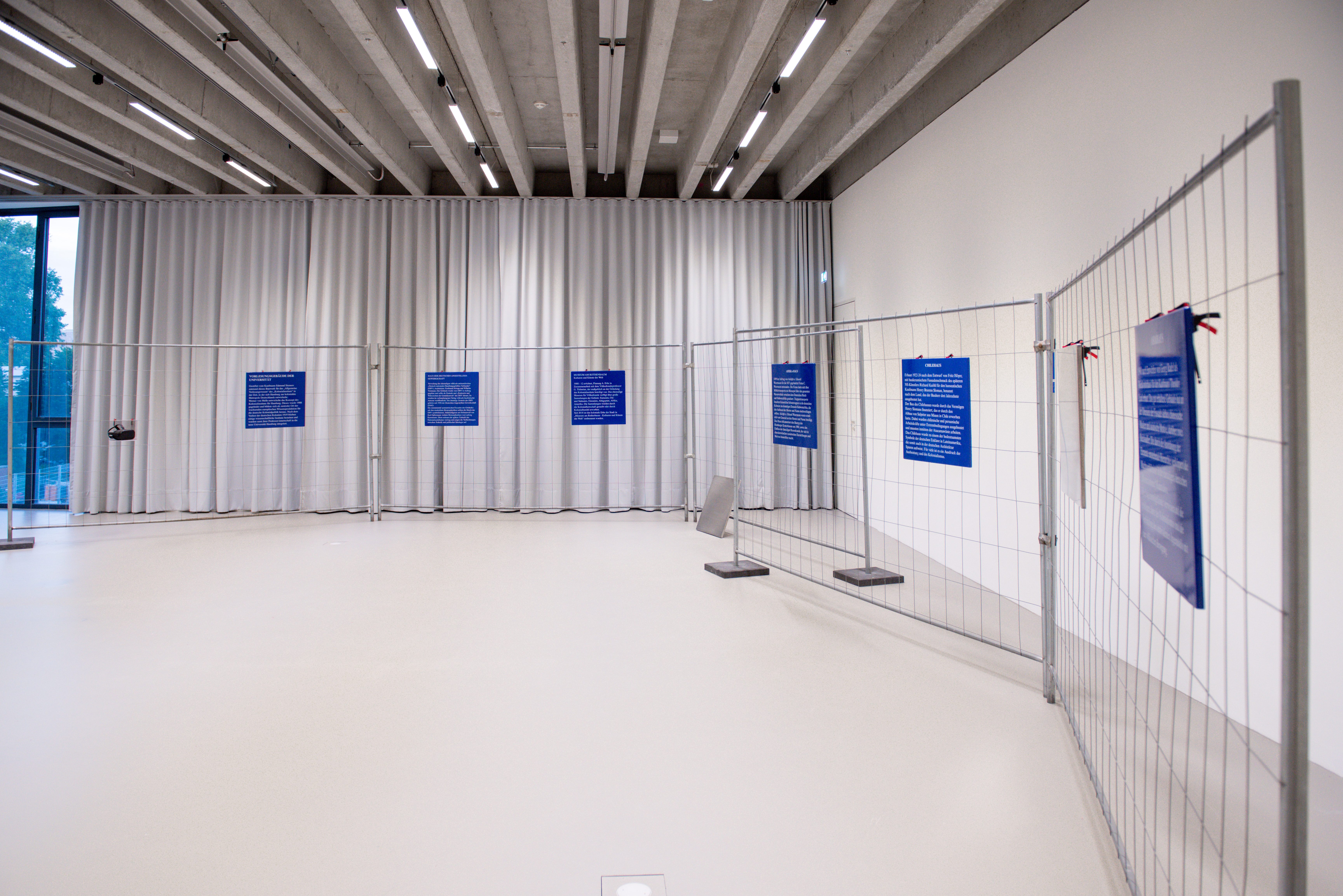
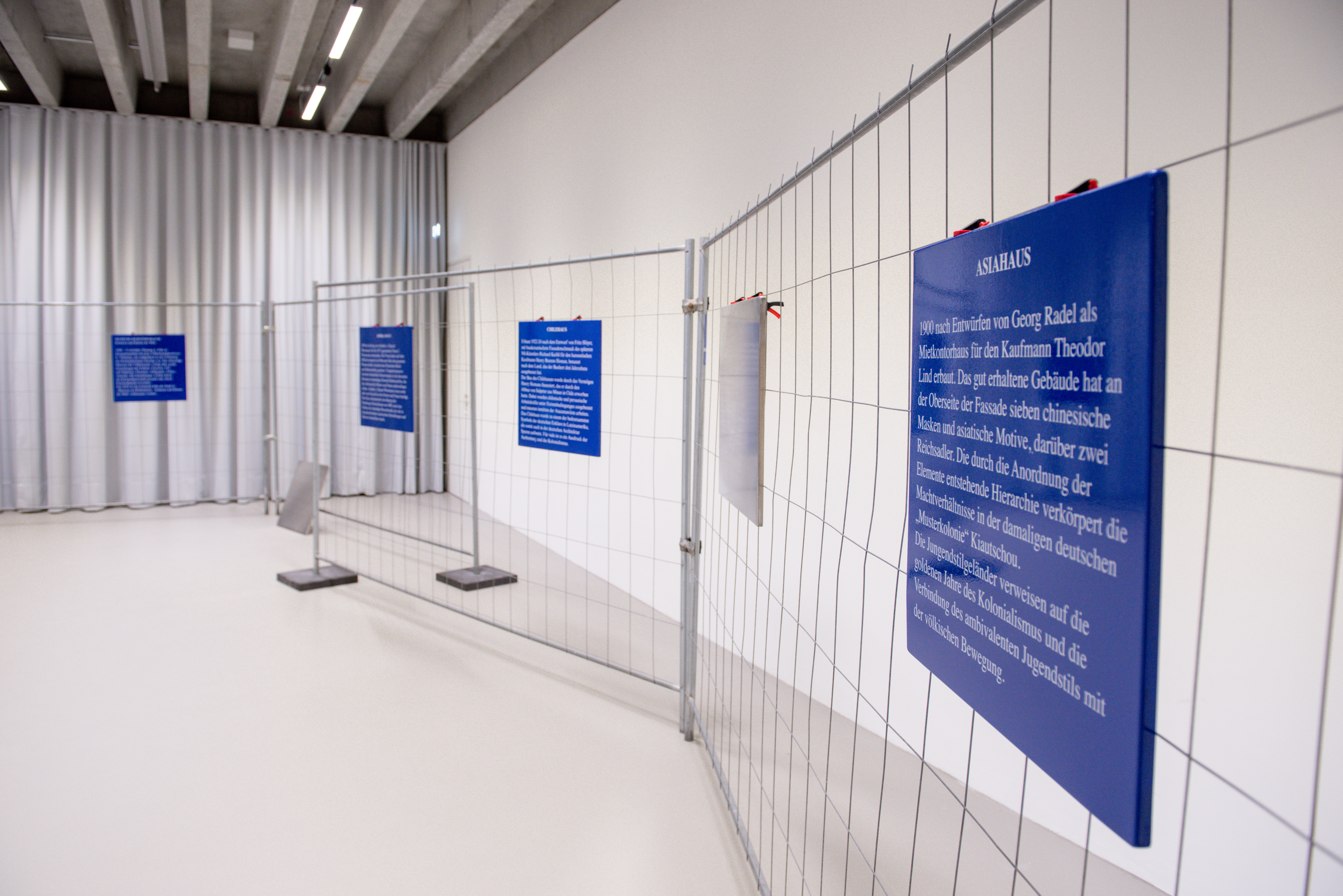
The «blue plaques» initially try to give a first historical impression of the architecture of Hamburg’s cultural monuments. However, these plaques decide, depending on the building, what kind of memory may be illustrated. To give an example, in the case of buildings with a complicated colonial past, such as the Chile, Africa and Asia House, the colonial part of the past is not mentioned at all. Instead, a memory without memory is created out of the diplomatic formality of selective remembering. The installation «The City of Hamburg and its Afterlife of Colonialism» rewrites this forgotten memory by appropriating the institutional formality. It makes the forgotten both present and visible by showing the colonial traces in the context of other images and reflecting the constructed representations, as a visual form of «acting» (Aby Warburg).

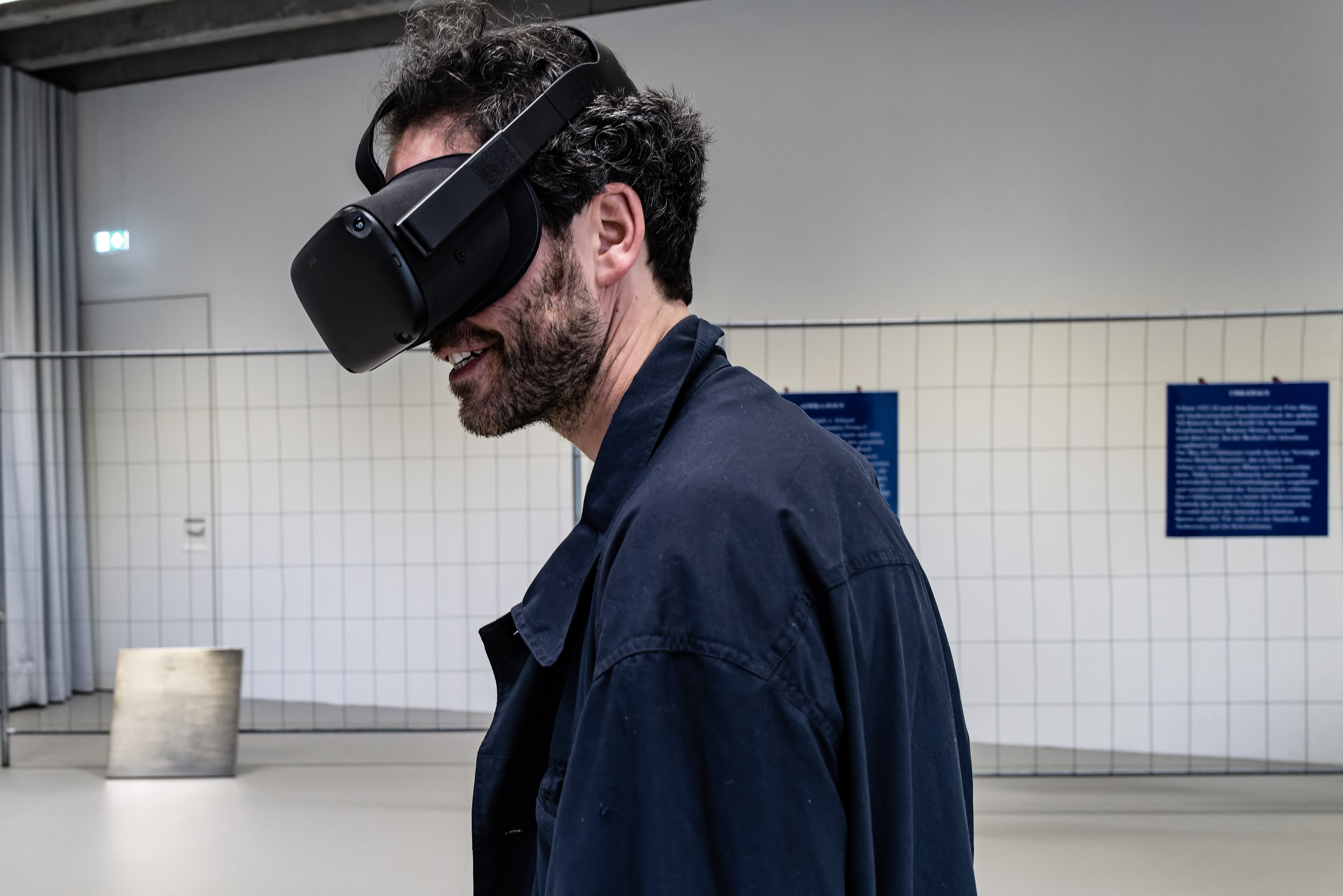
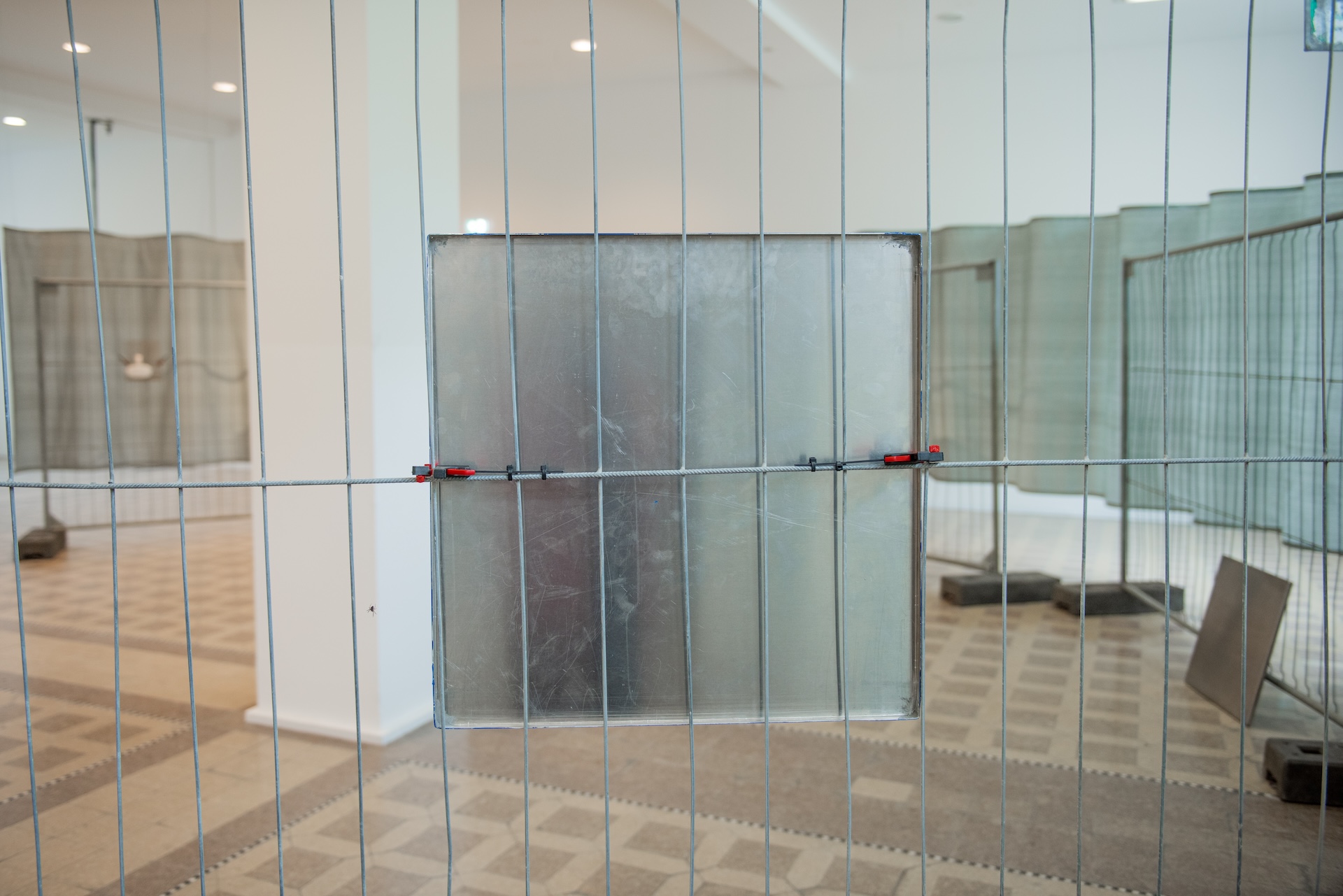
The installation consists of two constructions of site fences that function as two interconnected plaques, forming a visual constellation based on the narratives of representation from institutions (left side) and private spaces (right side) that can bedescribed as «the afterlife of colonialism».
The «blue plaques» initially try to give a first historical impression of the architecture of Hamburg’s cultural monuments. However, these plaques decide, depending on the building, what kind of memory may be illustrated. To give an example, in the case of buildings with a complicated colonial past, such as the Chile, Africa and Asia House, the colonial part of the past is not mentioned at all. Instead, a memory without memory is created out of the diplomatic formality of selective remembering. The installation «The City of Hamburg and its Afterlife of Colonialism» rewrites this forgotten memory by appropriating the institutional formality. It makes the forgotten both present and visible by showing the colonial traces in the context of other images and reflecting the constructed representations, as a visual form of «acting» (Aby Warburg).
The installation consists of two constructions of site fences that function as two interconnected plaques, forming a visual constellation based on the narratives of representation from institutions (left side) and private spaces (right side) that can bedescribed as «the afterlife of colonialism».
Intervention &
City Walk
City Walk
2021 - Today
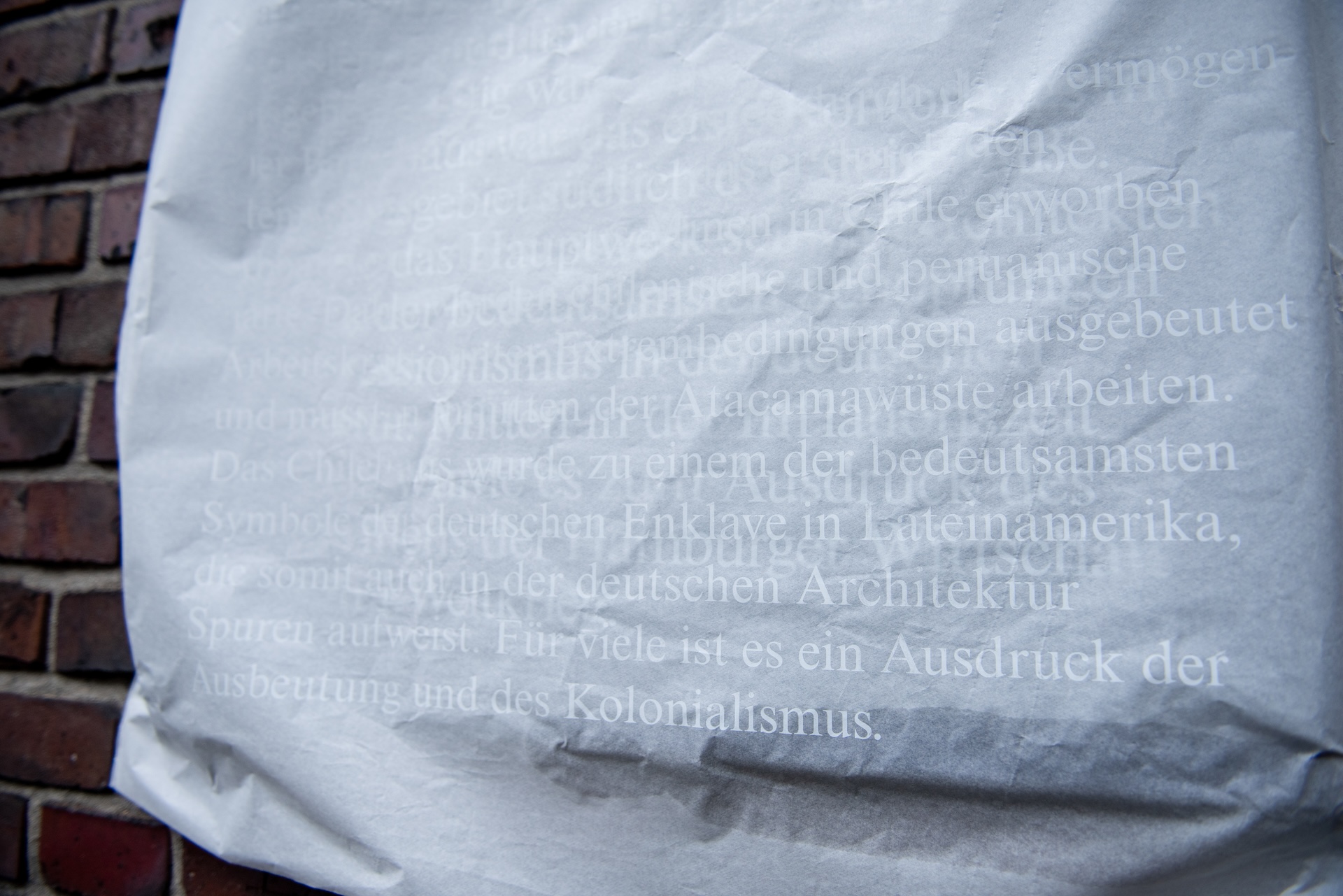
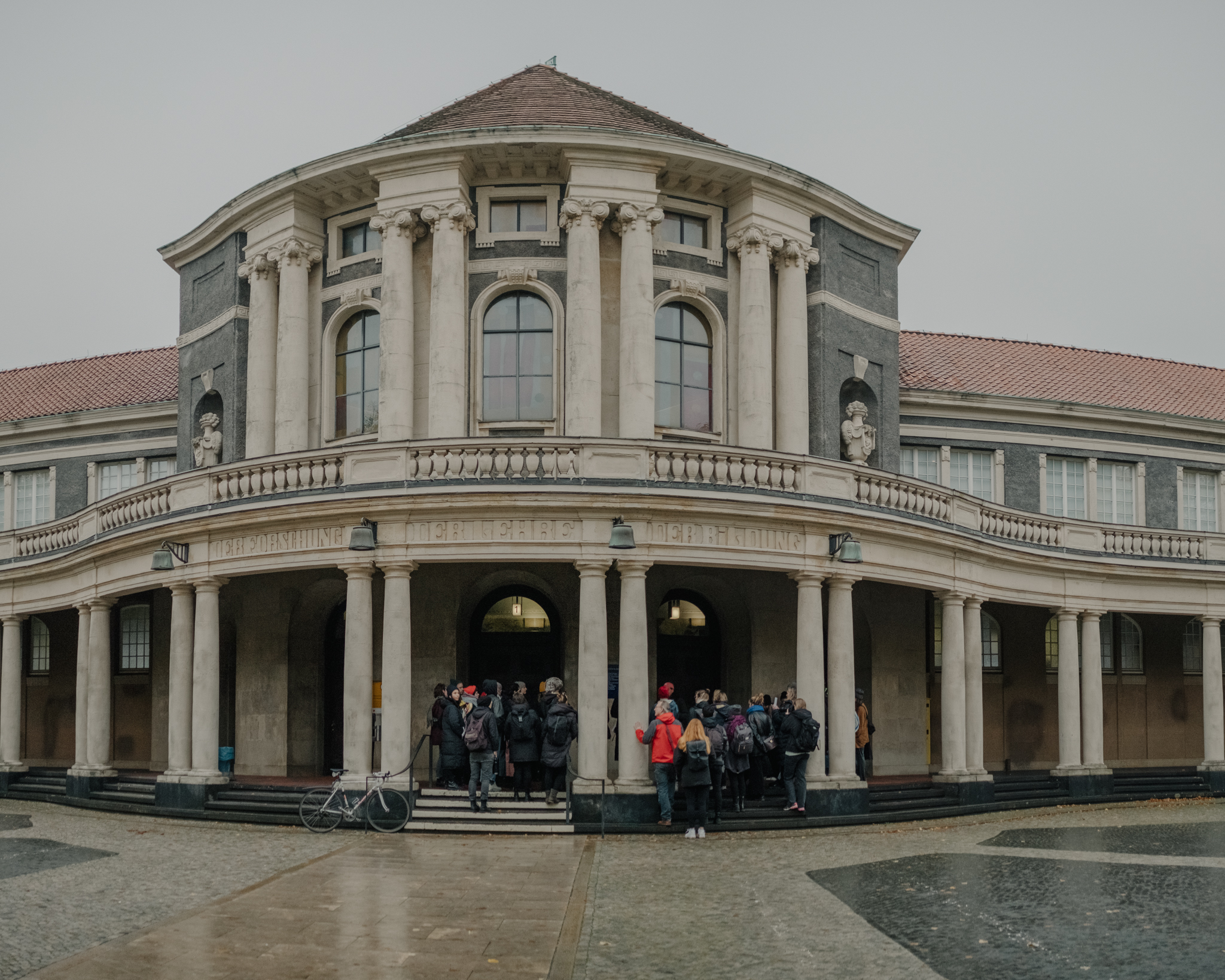
In the intervention, the plaques of the cultural monuments (Kulturdenkmaltafeln) are overlaid with silk-screen printed tissue paper. The formulated historical counter-narrative on the tissue paper illuminates the colonial past of the institutions, which are not to be found on the official cultural monument plaques because, due to the diplomatic formality of selective remembering, only certain memories find a place in the public space, while other memories are left out and suppressed because they are not supposed to be present as memories in public consciousness. By superimposing the narratives on the «blue plaques» through the semi-transparent tissue paper, both narratives become visible and the conflict between the two disparate narratives is made evident. In this way, both exist in the same space despite their disparity.